- Google’s algorithms evaluate backlinks based on semantic context, content relevance, and topical relationships, rather than domain authority.
- Contextual backlinks within thematically aligned content outperform non-contextual links in terms of SEO rankings, engagement, and sustainability.
- Scalable link-building relies on contextual placement, semantic anchor diversity, and content-driven outreach to establish and maintain lasting topical authority.
Contextual link building isn’t just another SEO buzzword; it’s the strategic backbone behind modern link acquisition practices. In a digital ecosystem where relevance matters more than brute force authority, SEO professionals must prioritize context alongside metrics like DR, DA, or TF. Google now evaluates links through surrounding content, domain topicality, and entity associations.
Over years of collaboration with SEO professionals, brands, and creative agencies, one truth continues to surface: a single, well-placed contextual link often outperforms dozens of unrelated backlinks. This is not theoretical; it’s consistently proven through performance data and measurable outcomes.
This article unpacks contextual link building in its full complexity, going beyond the basics to focus on the nuanced mechanisms, frameworks, and tactics that produce scalable results for brands seeking long-term search visibility. It is crafted for SEO leaders, strategists, and content-driven marketers who value depth and precision.
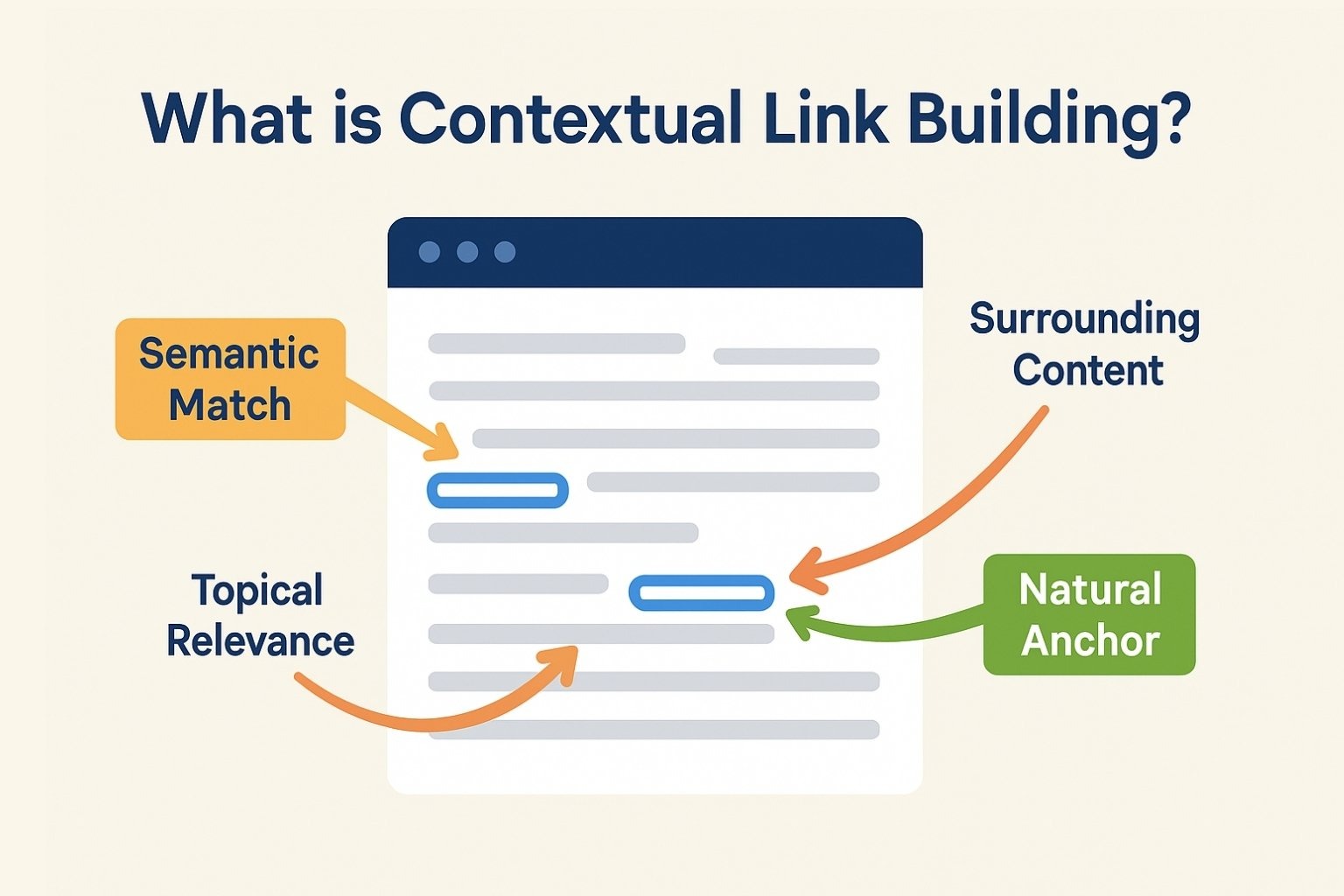
What is Contextual Link Building?
Defining Contextual Links
Let’s start with the core question many people search for online: what are contextual links, and how do they differ from general backlinks?
Simply put, a contextual link is a backlink that’s embedded within relevant and meaningful content. It exists within the natural flow of a sentence or paragraph, not in a sidebar, footer, or unrelated author bio.
According to the Editorial.Link’s guide, inbound contextual links signal to search engines that your content is trustworthy and authoritative within its topic area. This is a core reason they outperform non-contextual placements.
- The surrounding content enhances their meaning.
- They fit topically within both the source page and the destination.
According to statistics compiled by AIOSEO,
- More than 95% of web pages have zero backlinks, despite backlinks remaining a long-standing factor in SEO.
- When you see a hyperlink in a blog article about “on-page SEO” that points to a guide on “internal linking strategies,” that’s a contextual link.
- It flows organically, offers value to the reader, and search engines recognize it as highly relevant.
Compare that with a link placed at the bottom of a page under “resources” or in a templated widget across hundreds of domains. Contextual links, when done right, feel earned and editorial, not forced or programmatic.
Contextual Links vs. Traditional Links
Understanding the distinction between contextual links and traditional links is vital. Most legacy link-building strategies emphasized quantity and authority metrics alone. Agencies chased links from any high-DA website they could find, regardless of content alignment.
That model no longer works.
Google now evaluates a link based on the context in which it appears, not just the domain that hosts it. According to Backlinko’s “Google’s 200 Ranking Factors (2025 Edition),
- Links embedded within a page’s main content carry greater weight than those found in sidebars or footers.
- This provides a clear signal that context and placement directly influence link equity.
This shift aligns with a deeper understanding of semantic search and topic modeling. As a result, contextual links SEO efforts are gaining far more traction in organic search rankings.
Common Terminology You Should Know
For clarity, here are some commonly used terms and how they interrelate:
- Contextual linking: The practice of embedding relevant hyperlinks within body content that aligns topically with the destination. This directly ties into contextual links definition, which describes them as links placed naturally within meaningful editorial context rather than in sidebars or unrelated sections.
- Contextual link building service: A provider or agency offering outreach, content, and placement services that result in contextual backlinks.
- Contextual link-building solutions: Broader strategies or platforms that support scalable acquisition of contextual links. For beginners, asking what a contextual link is, it refers to a backlink placed within relevant, topic-aligned content to strengthen contextual relevance and reader value.
- Relevant link building: A synonym often used to describe the pursuit of links from topically similar sources and a core part of any seo contextual links approach. Understanding how to use contextual links effectively is key to building credibility and improving organic visibility.
Each of these terms will surface throughout the article, and their strategic importance will be explored in detail in the following sections.
The Role of Context in Google’s Semantic Search Evolution
From Keywords to Concepts
Google’s algorithm no longer just indexes strings of text. It interprets relationships between entities, ideas, and context using advanced machine learning models, such as BERT and RankBrain. That’s why contextual SEO matters more than ever.
For example:
- A page about “running shoes” linked from an article discussing “marathon training programs” has contextual strength.
- A link from a blog on “credit repair” to that same page raises relevant red flags.
This is where contextual links SEO strategies align with Google’s algorithmic expectations.
Entity Recognition and Relevance Scoring
Entity recognition is how search engines identify real-world things such as brands, people, and places, and understand their relationships to each other.
A contextual backlink that connects semantically recognized entities:
- Boosts topical association
- Strengthens the destination URL’s authority within its niche
For example:
- If your site focuses on email marketing tools and you earn a contextual link from a well-ranked article about “CRM automation,” that link carries entity-aligned relevance.
- It signals to Google that your brand is part of a broader conversation around marketing technology.
This is why a contextual link building strategy should never be built in isolation from your content strategy. Both need to reinforce and support each other.
The Impact of RankBrain and BERT
RankBrain and BERT have changed how Google interprets intent. They analyze not only the search query but also:
- The context of documents
- How words relate to one another within that context
As a result, contextual backlinks now signal alignment between linked documents in ways that go far beyond simple anchor text.
It’s no longer just about matching keywords. The algorithm now favors semantic relationships, creating a significant advantage for brands that invest in relevant content and contextual linking strategies.
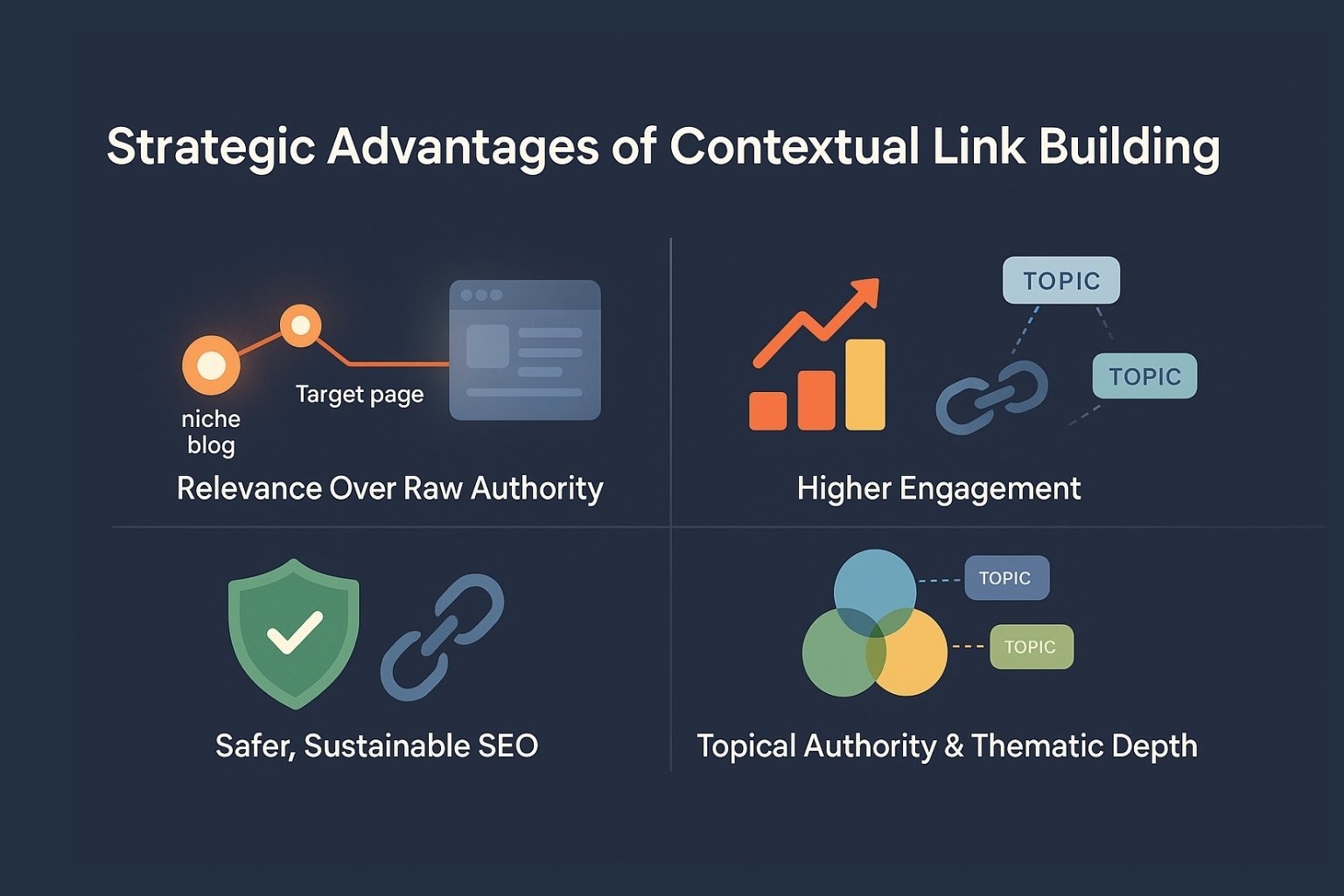
Strategic Advantages of Contextual Link Building
1. Relevance Over Raw Authority
In traditional link-building strategies, acquiring links from high-authority domains was considered the gold standard. But contextual link building redefines authority in terms of relevance. A backlink from a niche-specific, mid-tier blog often performs better than a homepage link from a general news site with a higher DR.
This is particularly noticeable when the linking page shares topical overlap with your own. The semantic synergy between the source and destination strengthens both the ranking potential and user alignment.
2. Higher Click-Through Rates and Better Engagement
In traditional link-building strategies, acquiring links from high-authority domains was once considered the gold standard. However, contextual link building redefines authority in terms of relevance.
- A backlink from a niche-specific, mid-tier blog often performs better than a homepage link from a general news site with a higher DR.
- This is especially true when the linking page shares topical overlap with your own.
The semantic synergy between the source and destination strengthens both ranking potential and user alignment.
3. Safer and More Sustainable SEO
Contextual links naturally align with Google’s guidelines for link schemes. Unlike PBNs or guest post farms, they appear editorial and earned, making them safer over time and less likely to trigger penalties.
According to an analysis by BuzzStream, around 94% of online content fails to secure any external links.
- Only about 2.2% of published content acquires links from multiple other sites.
When done correctly, contextual link building strategies create a sustainable foundation for long-term SEO. They don’t rely on loopholes or risky automation but instead align with:
- Content marketing
- User experience
- Semantic web principles
Adam Connell’s 2025 link-building statistics report that “on average, top-ranking results on Google have 3.8 times more backlinks than lower-ranking pages.”
This reinforces that sustainable SEO depends not just on link volume but on contextual relevance and quality placement.
4. Better Topical Authority and Thematic Depth
Topical authority isn’t built overnight. But contextual backlinks contribute to it more than any other type of link. When a site earns links from other thematically aligned pages over time, its authority in that topic cluster rises.
This becomes especially valuable when executing cluster-based content strategies. Internal contextual linking reinforces this even further. The result is a powerful compound effect: better rankings, more visibility, and faster indexing for new content.
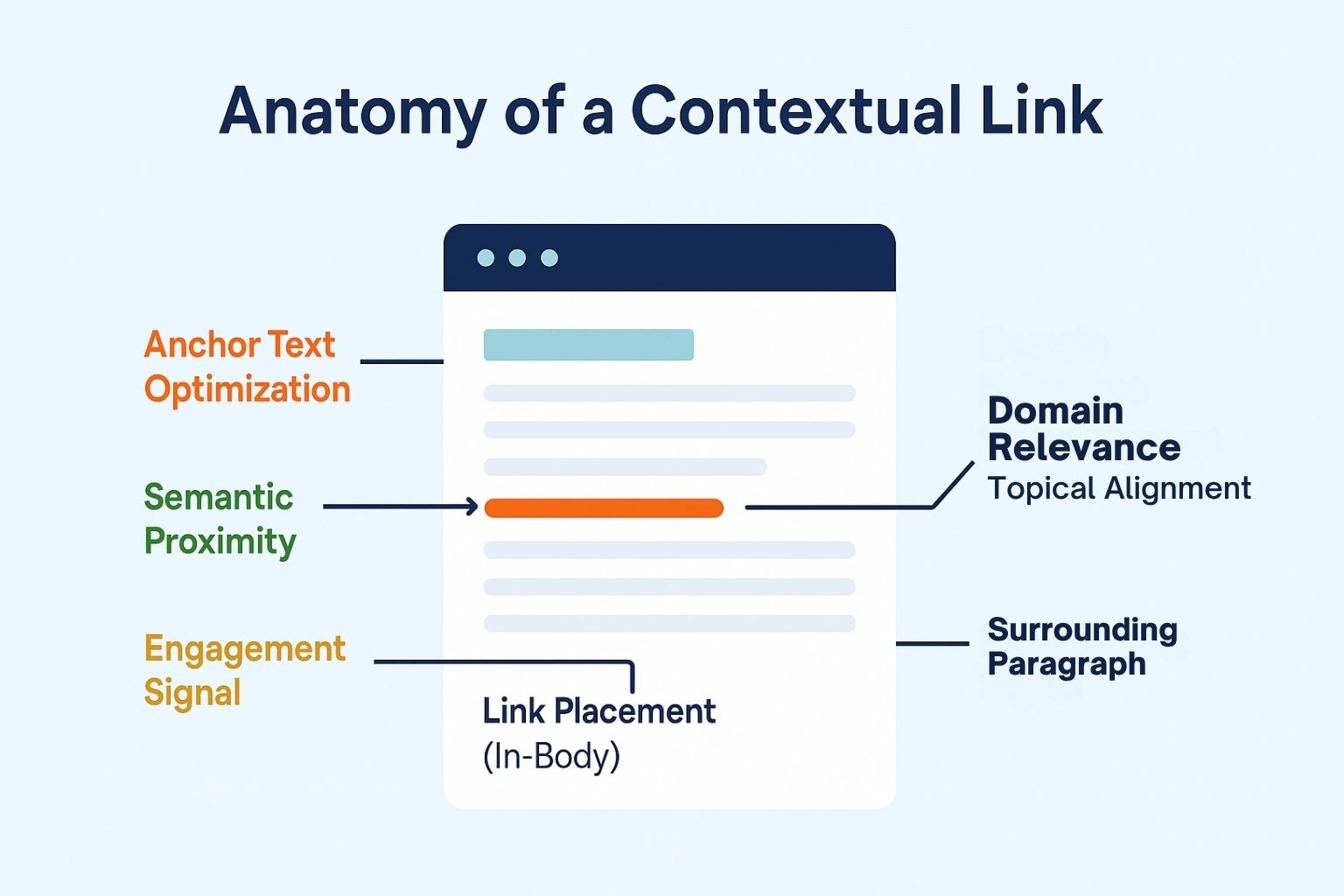
The Anatomy of a High-Impact Contextual Link
Link Placement Matters More Than You Think
Where a link appears on a page can dramatically influence how search engines interpret it. A contextual backlink in the main body of the content, surrounded by semantically aligned sentences, carries much more weight than a link in a sidebar, navigation menu, or footer.
According to the guide by Backlinko, “the number of unique referring domains linking to a page” had one of the highest correlations with first‑page Google rankings. Search engines assign more importance to editorial content zones. This is where content is expected to offer real value, not serve as a placeholder for template elements.
Anchor Text and Contextual Signals
Anchor text remains important, but its evaluation is now influenced by the surrounding text. Google examines the sentence, paragraph, and even entire page to understand why the link exists. This is why over-optimized exact match anchors can backfire.
Instead, a diverse mix of anchors, branded, partial match, and LSI (Latent Semantic Indexing) helps contextual links feel natural. This diversity also protects against algorithmic penalties.
Page Relevance and Domain Topicality
It’s not enough for the linking page to mention your brand. It needs to operate in the same topical space. A contextual link to a cybersecurity platform is far more valuable when placed on a site about data privacy, not home decor.
When evaluating potential placements, it is essential to assess not only page-level relevance but also the overall topical focus of the domain. This forms the foundation of any relevant link building framework.
Engagement and User Experience
Google also evaluates user interaction with the linking page. If a contextual link lives on a page with high bounce rates and low time on page, it may signal low value. That’s why link-building efforts must consider UX factors, not just linking metrics.
A well-crafted contextual link exists within content that users actually read, engage with, and share. That kind of link adds value, both for SEO and brand exposure.
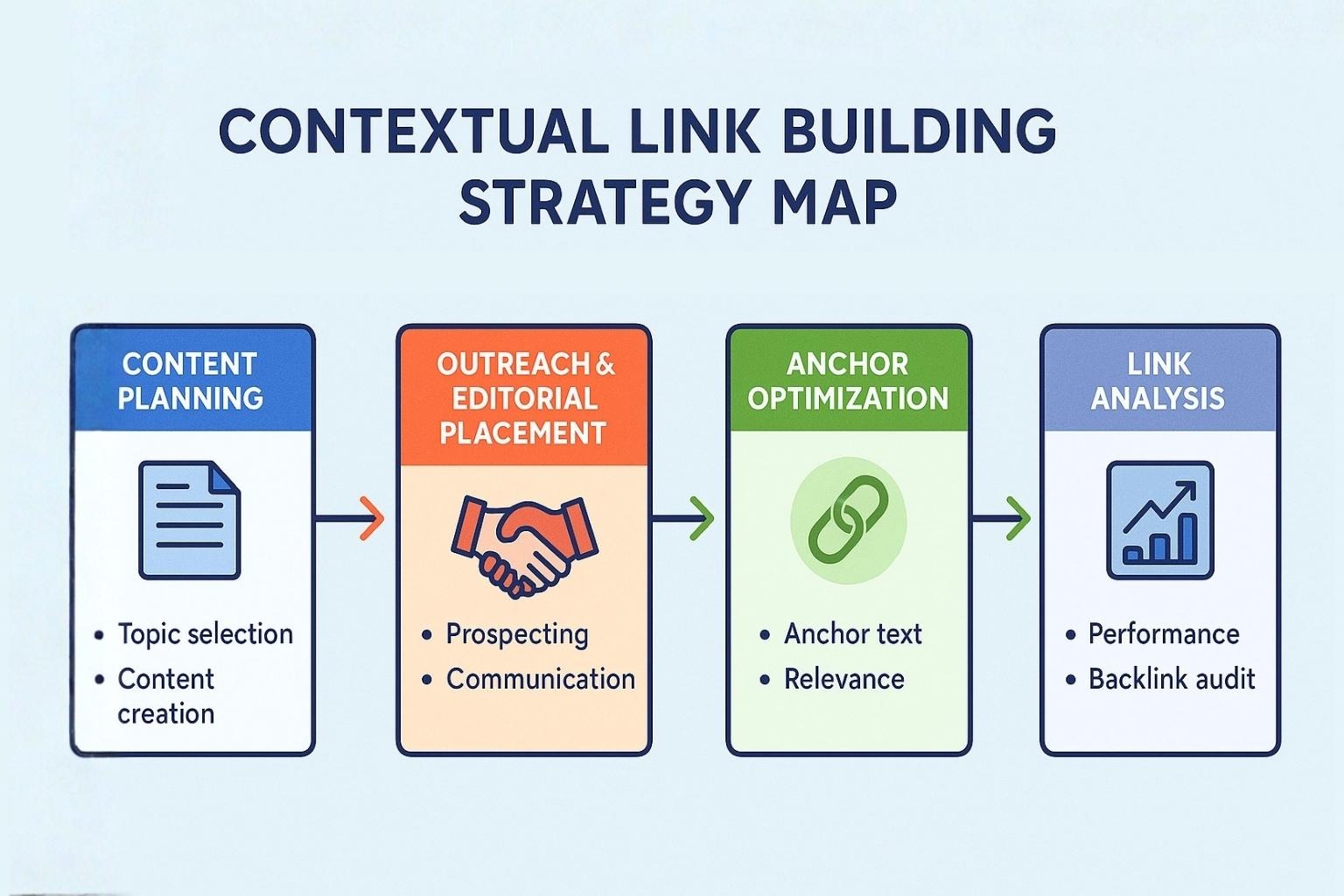
Contextual Link Building Strategies That Actually Scale
Content-Led Approaches
Contextual links should appear naturally within valuable content, connecting thematically aligned pages and enhancing topical relevance. Sustainable campaigns integrate contextual link building into editorial workflows and content planning. According to survey data cited by FatJoe, in 2025, approximately 73% of link builders expect to rely on digital PR, indicating a clear shift toward editorial and context-driven link placements.
Effective content-led strategies include:
- Data-backed editorial articles that provide original insights, making them naturally linkable.
- Topic cluster development around core pages, allowing you to build internal contextual links that amplify external ones.
- Digital PR campaigns that combine thought leadership with reactive commentary to earn contextual backlinks from news and industry publications.
Each of these approaches feeds the others. Quality content earns better links. Better links drive more visibility. More visibility drives more links. That’s a true flywheel.
Outreach and Editorial Partnerships
Manual outreach remains a cornerstone of contextual link acquisition when paired with strategic selectivity. Rather than mass outreach, it is far more effective to cultivate long-term editorial relationships with writers, editors, and publishers in the same vertical.
Personalization plays a crucial role; response rates often increase significantly when content ideas and anchors are tailored to a publication’s editorial history. This process transforms link building from a transactional exercise into reputation building within a defined topical ecosystem.
Link Reclamation and Broken Link Insertion
One of the most overlooked contextual link building strategies is reclaiming lost or broken mentions. When a brand has existing visibility, it’s common to find unlinked brand mentions or broken inbound links across the web. Fixing these, especially when the original content still provides context, is a low-effort, high-value activity.
Tools such as Ahrefs’ Content Explorer and Google Alerts can be used to monitor unlinked brand mentions that could be converted into contextual backlinks with minimal friction.
Niche Edit Insertions with Content Alignment
When done carefully and ethically, niche edits, also known as contextual link insertions, can be powerful. They allow placement within aged content that already has search value and existing rankings. However, the surrounding content must be audited to ensure:
- The link appears natural within the flow of the paragraph.
- The anchor text and surrounding copy are modified (if needed) to match your page’s topic.
- The target page provides true value related to the context.
This process requires editorial sensitivity and a high standard of content alignment. Every insertion should be approached as an earned editorial mention rather than a transactional placement.
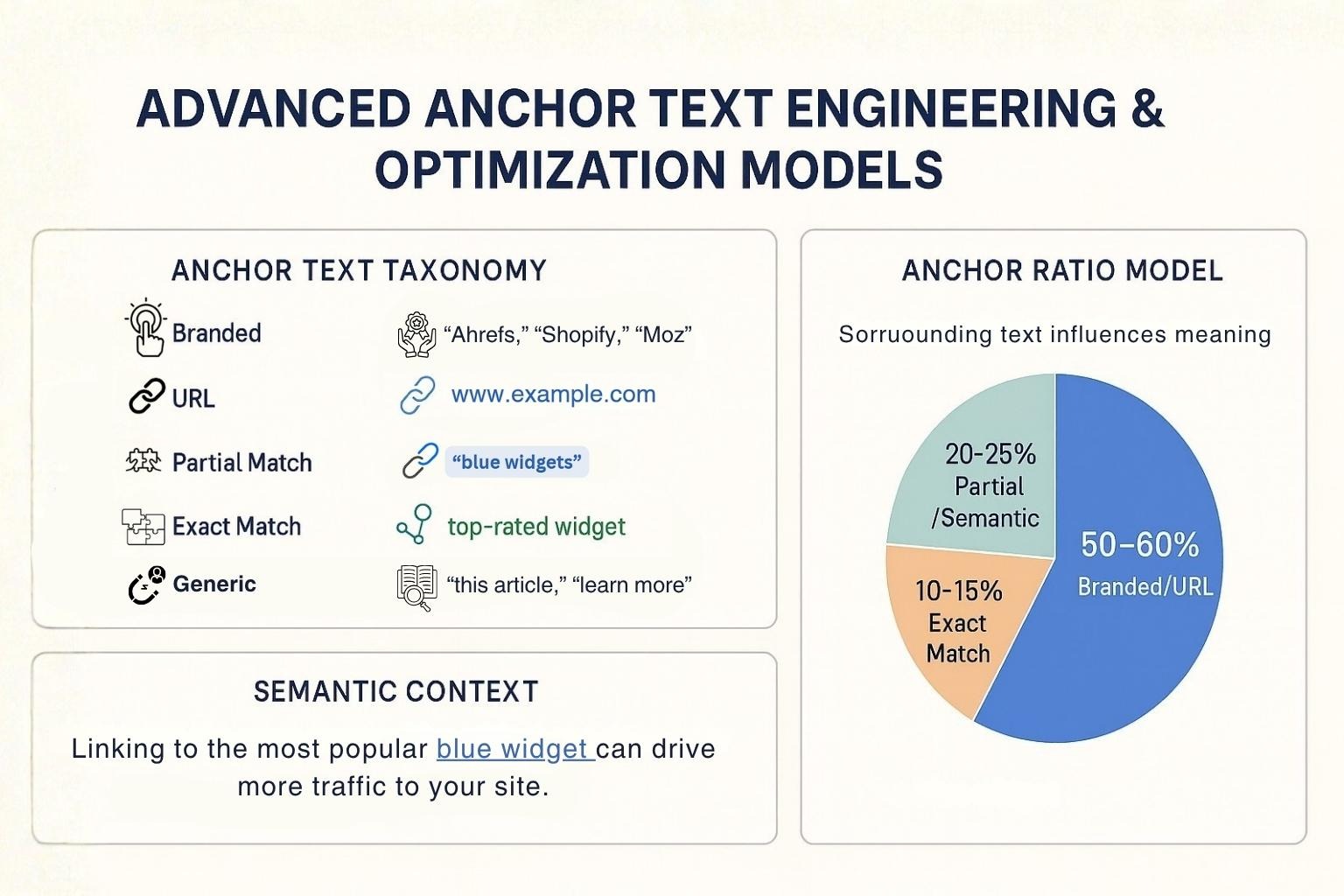
Advanced Anchor Text Engineering & Optimization Models
Anchor Text Taxonomy
Effective contextual linking doesn’t rely on brute-force exact-match anchor use. That tactic lost its efficacy years ago. Modern link-building strategies require a diverse, intentional anchor text profile rooted in semantic alignment and distribution strategy. Anchors can be classified into several categories based on purpose and context:
- Branded Anchors: e.g., “Ahrefs,” “Shopify,” “Moz”
Safe, brand-reinforcing, and useful for protecting against over-optimization. - URL Anchors: e.g., “https://example.com”
Common for citation-style references and maintaining link profile variety. - Generic Anchors: e.g., “Click here,” “this article,” “learn more”
Useful sparingly; they lack keyword signaling but help diversify the link graph. - Partial Match Anchors: e.g., “link building strategies,” “contextual SEO solutions”
A balanced option that maintains topical relevance without triggering filters. - Exact Match Anchors: e.g., “contextual link building”
Still powerful, but should be used in moderation and only in highly relevant contexts. - LSI & Semantic Variants: e.g., “relevant backlinks,” “link acquisition techniques”
These help capture related keyword clusters and improve thematic breadth.
A well-rounded anchor text taxonomy supports natural link profiles while preserving keyword targeting in a way that aligns with current search engine evaluation models.
Surrounding Text and Semantic Cues
Search engines no longer evaluate anchor text in isolation. Context matters. Google’s algorithms analyze surrounding phrases, co-occurring keywords, and sentence-level context to infer deeper meaning and semantic relevance. That means link value isn’t just about the anchor itself; it’s about the entire sentence and paragraph that surrounds it.
Best practices include:
- Embedding links within descriptive, topically aligned sentences.
- Avoid using standalone anchors in bullet lists or footers unless appropriate.
- Including supporting keywords or entities nearby to strengthen semantic cues.
- Ensuring the destination page’s topic aligns with the source content’s narrative.
This approach improves both crawler interpretation and user comprehension, resulting in higher-quality SEO contextual links that perform better long-term.
Anchor Ratio Optimization
While there’s no perfect formula that fits every niche, experience shows that a strategic distribution model protects against penalties and promotes keyword growth effectively. Here’s a data-driven framework to follow:
- 50–60% Branded or URL Anchors
These anchors establish trust and signal brand authority. They are safe and sustainable at scale. - 20–25% Partial Match or Semantic Variants
Ideal for building contextual signals while maintaining a natural tone. - 10–15% Exact Match Anchors
Should be used sparingly, typically for cornerstone pages or high-priority keywords. Contextual alignment is critical here. - <5% Generic Anchors
Used to break patterns and preserve diversity, especially from generalist publications.
Monitoring and adjusting these ratios over time ensures alignment with Google’s evolving expectations. Anchor profiles should grow organically with your backlink portfolio, mirroring how links would naturally occur through real editorial processes.
The Science Behind Link Relevance: Semantic Distance & Topical Authority
Understanding Semantic Distance
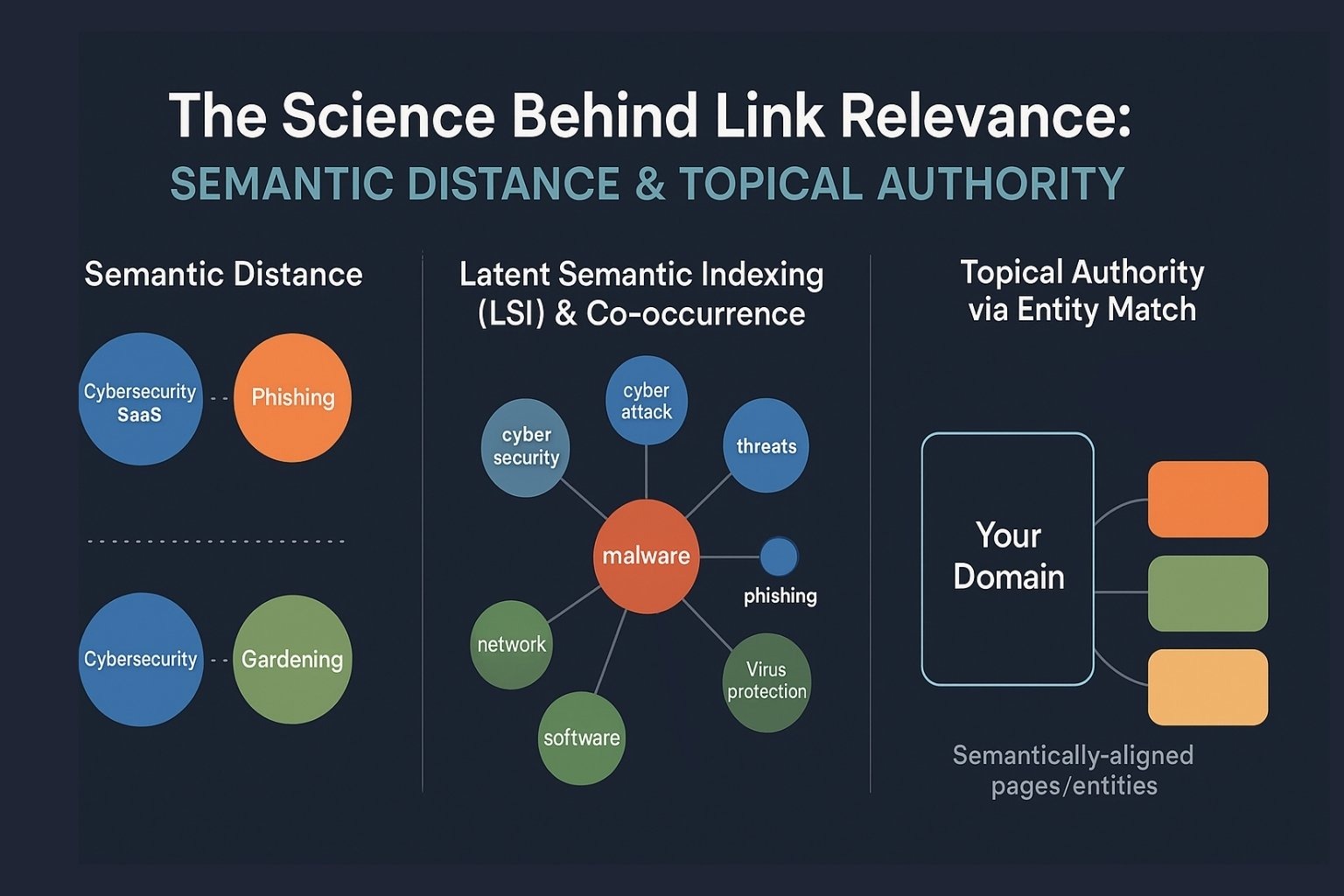
Semantic distance refers to how closely two topics are related in meaning, which is critical for assessing contextual backlinks. When Google’s NLP systems crawl your link and the referring page, they evaluate how semantically adjacent the topics are.
For example:
- If you run a cybersecurity SaaS and get a link from an article about phishing, that represents low semantic distance.
- A link from a gardening blog, even if it mentions the word “security,” is too far off to carry meaningful relevance.
Semantic distance remains one of the most under-discussed dimensions of contextual link value. It should be factored into every evaluation during link prospecting.
As Vazoola notes, niche-relevant backlinks serve as a strong indicator that a site is a credible information source within its industry. This reinforces why topical alignment should be a core evaluation metric.
Latent Semantic Indexing and Co-occurrence
Latent Semantic Indexing (LSI) helps identify the broader topic landscape around a keyword. For contextual link building, this means choosing placements where your target anchors naturally co-occur with semantically aligned terms.
In practice, I analyze:
- Keyword density and coverage across the linking page
- Topic modeling using tools like Surfer SEO
- Entity co-occurrence patterns in the source and destination pages
These insights help me identify content environments where links will both make sense and be algorithmically valuable.
Topical Authority Through Entity Match
Topical authority isn’t just about your domain’s age or link volume. It’s about how your content and backlinks reinforce specific entity clusters. By targeting contextual links from pages that mention or are associated with the same entities, you reinforce your site’s association with that topic.
This becomes especially valuable when building authority in competitive verticals. The goal is to create “link neighborhoods” around core concepts that Google recognizes as belonging to the same semantic network.
Contextual Link Building vs. Other Link Types
The Limitations of Non-Contextual Links
Many SEO professionals still chase links from high-DR directories, forums, or footers, assuming volume will carry weight. However, Google’s algorithm prioritizes contextual signals instead.
- Links placed outside the main content often lack thematic alignment.
- These non-contextual links add little to no value in today’s ranking landscape.
Analyses of numerous backlink profiles across clients and competitors consistently show that the links driving measurable ranking improvements are:
- Placed within editorial content
- Surrounded by relevant sentences
- Published on thematically relevant domains
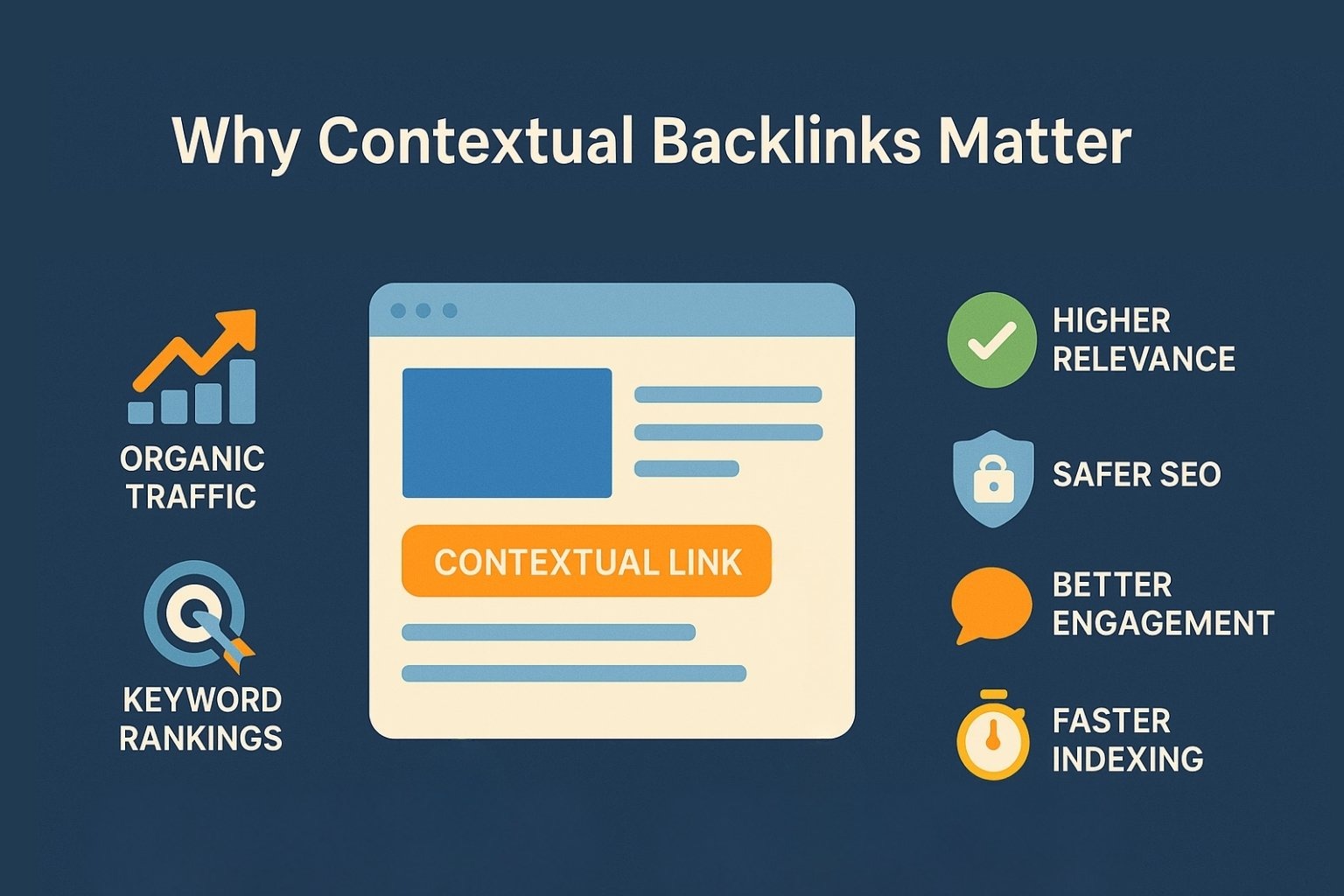
Why Contextual Backlinks Outperform
Contextual backlinks operate differently from the ground up. They:
- Appear in the most authoritative zone of a page
- Have anchor text framed by supporting language
- Signal topic association through surrounding content
- Engaging users directly often leads to higher CTR
When comparing performance between two backlink types, the contextual variant almost always drives more referral traffic, indexation speed, and search visibility.
Avoiding Link Noise and Overlap
It is important to avoid bloating backlink profiles with links that exist solely for vanity metrics.
- Ten relevant backlinks from semantically aligned sources are far more valuable than one hundred random profile or directory links.
- Quality and contextual alignment always outweigh raw quantity.
Every well-structured contextual link building campaign should include a pruning phase to remove or disavow low-context links that dilute topical focus.
Evaluating and Auditing Contextual Backlinks for SEO Impact
The Right Metrics to Track
Evaluating contextual links goes beyond DA or DR. Key areas of focus when evaluating contextual backlinks include:
- Topical Relevance Score: How closely the page’s topic aligns with ours
- Anchor Match Quality: Does the anchor reflect our keyword goals?
- Contextual Placement Score: Is the link embedded within a paragraph or floating at the top/bottom?
- Traffic and Engagement: Does the linking page rank or drive meaningful traffic?
These qualitative metrics tell a far more complete story than traditional link authority scores.
Tools for Deep Link Auditing
The most effective tools for assessing contextual backlink quality include:
- Ahrefs: for link profile comparisons and anchor analysis
- Semrush: for traffic estimates and keyword rankings of the referring page
- Surfer SEO: for semantic alignment between the linking and destination content
- Google Search Console: to track actual performance and indexation signals
Combining these gives a 360-degree view of backlink health and value.
Creating a Contextual Link Quality Matrix
For teams managing large-scale link acquisition strategies, building a link scoring system can be invaluable. A Contextual Link Quality Matrix can be used to evaluate:
- Page authority (external)
- Domain topic match (semantic proximity)
- In-content placement
- Anchor naturalness
- Referral traffic potential
This matrix helps prioritize outreach and partnership efforts and ensures resource allocation favors high-value opportunities.
Internal Contextual Linking as a Foundation
Why Internal Links Deserve More Attention
While most link building discussions focus on external backlinks, internal contextual linking is just as important, especially when scaling authority site structures. These internal links distribute PageRank across your domain, signal content relationships, and guide Google’s understanding of topical clusters.
Internal links should be mapped with the same strategic intent as inbound links, ensuring they are placed within the body of relevant content and aligned with semantic themes. That means placing them within the body of articles, aligning anchor text with semantic themes, and ensuring content hierarchy mirrors the business goals of the site.
Strategically placed internal contextual links can:
- Help new content get crawled and indexed faster.
- Improve rankings of cornerstone content by consolidating link equity.
- Reduce orphaned pages and improve crawl depth efficiency.
Anchor Text Strategy for Internal Contextual Links
Unlike external links, internal anchors provide more freedom, since you control the implementation. Exact match anchors should be reserved for cornerstone content, while partial or branded variations support a more natural distribution. Instead, use:
- Exact match for cornerstone and high-priority pages.
- Partial match or variations for supporting cluster articles.
- Branded or generic anchors are used sparingly to retain natural flow.
This diversity mirrors your external anchor profile and reinforces Google’s understanding of your topical map.
Cluster-Based Internal Contextual Linking
One of the most effective internal contextual linking strategies involves clustering content around pillar topics and linking satellite pieces contextually back to the hub. For example:
- Pillar: “SEO Link Building Strategy”
- Supporting Articles: “Contextual Link Building Tactics”, “Anchor Text Optimization”, “Link Relevance Metrics”
Each supporting article links back to the pillar, and ideally to each other, using in-content links. This not only boosts rankings for the main hub but also increases average session duration and topical authority.
Anchor Distribution, Link Velocity, and Page Targeting
Managing Anchor Distribution Over Time
Anchor diversity is critical, but it’s also temporal. I monitor how anchor text types evolve over time for each key landing page. A surge in exact match anchors in a short window can raise red flags, even if those links are contextual.
To manage this, I use tracking spreadsheets or anchor distribution tools in Ahrefs to:
- Monitor the ratio of exact vs branded anchors by URL.
- Set quarterly anchor diversification goals.
- Rebalance with internal links or future placements when needed.
The goal is not just variety but consistency and control.
Understanding Link Velocity and Its Signals
Link velocity refers to how quickly you acquire links. A sudden spike in contextual backlinks, especially if they all share similar anchor types, can look suspicious. While Google doesn’t inherently penalize for fast growth, unnatural patterns do raise quality review triggers.
I recommend ramping contextual link acquisition gradually:
- Start with 3–5 links per month per asset.
- Scale based on content output and indexation health.
- Adjust based on your niche’s typical backlink growth patterns.
Velocity should match the organic pace of editorial content publishing and industry engagement.
Mapping Links to Funnel Stages
Every contextual link building campaign should map placements to content type and funnel stage. I break content into three types:
- Top of Funnel (TOFU): Educational guides, industry overviews, ideal for high-reach contextual links from generalist publishers.
- Middle of Funnel (MOFU): Comparisons, how-to articles best served with links from niche blogs or SaaS review sites.
- Bottom of Funnel (BOFU): Product pages, case studies require highly targeted, tightly themed contextual links, often built through direct publisher relationships.
Matching the intent of the linking page with the intent of the destination is key to high conversion and ranking performance.
Monitoring and Improving Your Contextual Link Profile
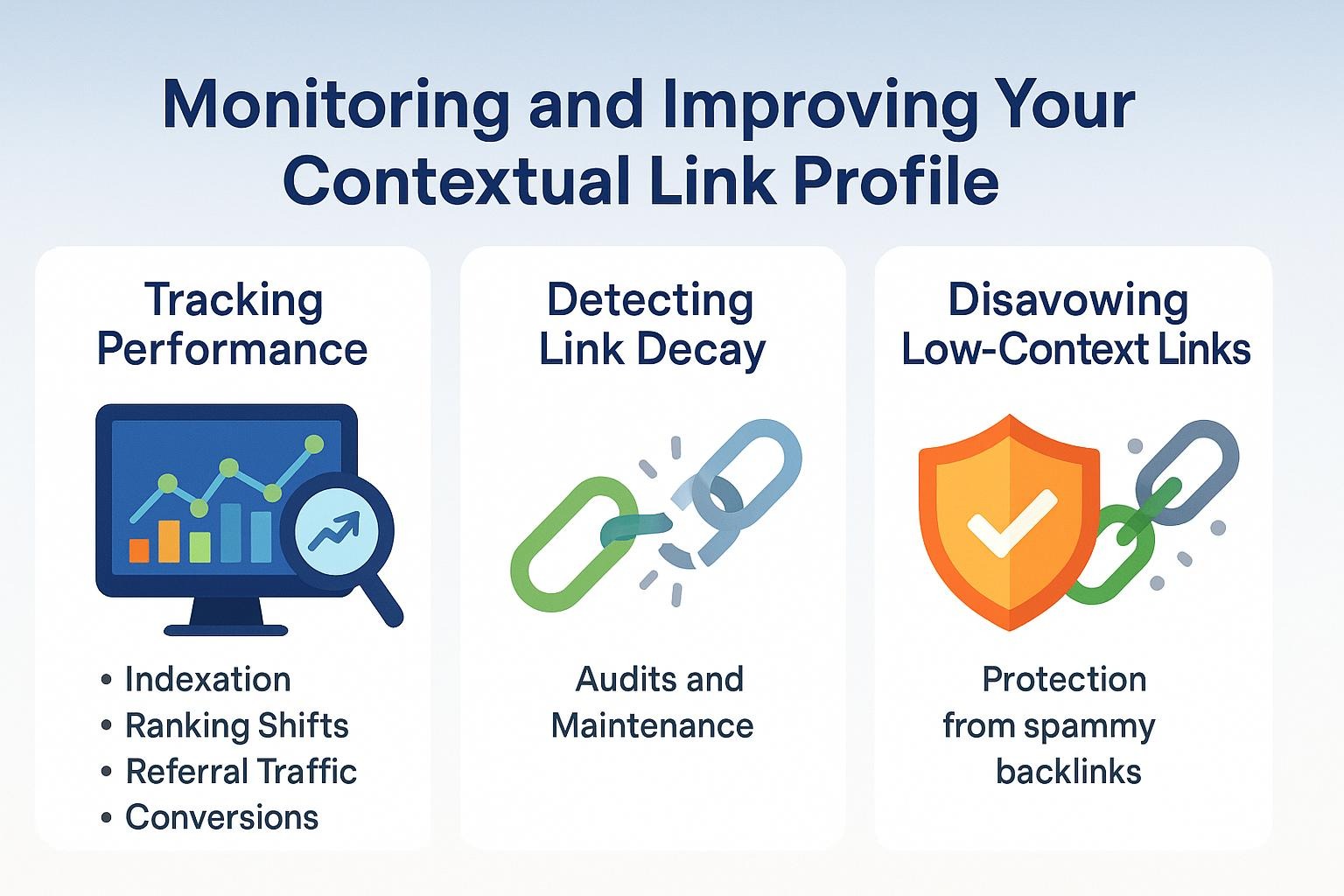
Tracking Contextual Link Performance
Building contextual backlinks isn’t enough. It is essential to monitor how each contextual link performs from both technical and business perspectives. The KPIs to track include:
- Indexation speed of the target URL post-link.
- Ranking changes for core keywords after the link goes live.
- Referral traffic and engagement from the linking page.
- Time-on-site and conversions for linked sessions.
Use UTM parameters sparingly if links are nofollowed or from high-traffic sources. Otherwise, tools like Google Search Console and attribution software can help isolate impact.
Detecting Link Decay and Context Loss
Over time, some contextual links decay in value. Pages get updated, anchor text is changed, or links get removed entirely. Monthly link freshness audits help ensure that key placements remain active and contextually valid.
This process includes:
- Crawling existing backlinks with Screaming Frog or Sitebulb.
- Spot-checking anchor text and the surrounding content context.
- Notifying webmasters or partners if quality drops.
Retaining and reinforcing existing contextual links is often more cost-effective than building new ones.
When and How to Disavow Low-Context Links
Not every link needs to be disavowed, but when backlinks from irrelevant, spammy, or deindexed sources are discovered, they should be reviewed and, if necessary, included in a disavow file.
Important: context loss isn’t always a penalty trigger. But if irrelevant backlinks dilute your topical focus, it’s worth cleaning your profile to maintain signal clarity.
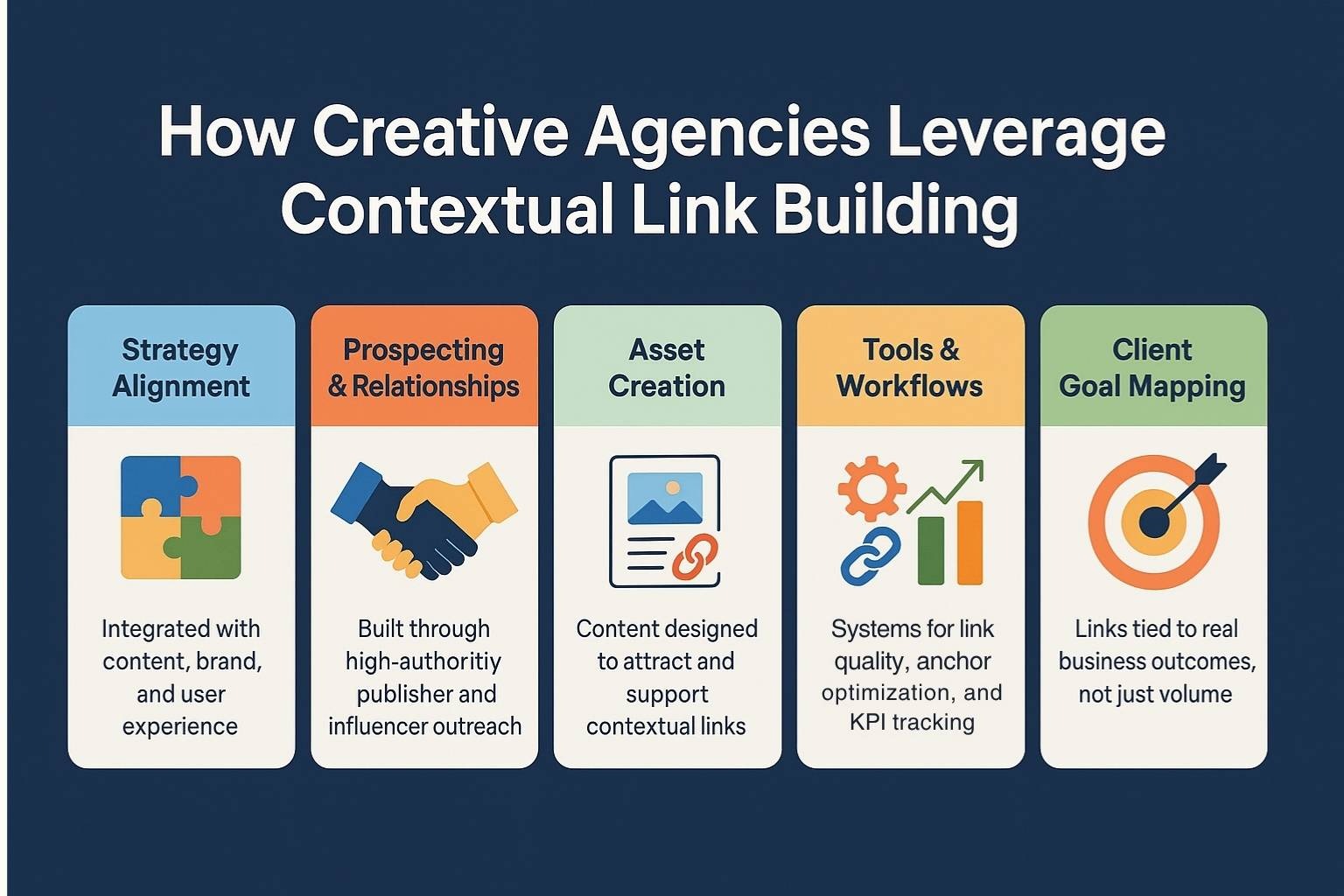
How Creative Agencies Leverage Contextual Link Building
Strategic Integration Across Disciplines
Creative agencies that excel at SEO view contextual link building not as an isolated tactic but as a strategic component woven into the broader marketing fabric. They align link acquisition with brand messaging, content strategy, and user experience, ensuring every contextual link supports both editorial relevance and business objectives. For example, when a campaign develops a thought‑leadership asset or brand story piece, it consciously designs the narrative to be linkable, focusing on insights, visuals, or data that naturally attract contextual backlinks.
Prospecting and Editorial Relationships
Link building in a creative agency context involves cultivating genuine relationships with publishers, journalists, and niche authors, rather than relying on mass outreach templates.
The most effective agencies follow a dual approach:
- One arm focuses on scouting high-authority domains where a contextual link would have thematic alignment.
- The other develops content assets tailored to those outlets.
This may include:
- Guest articles
- Sponsored editorial features
- Curated industry reports
- Collaborations with influencers in the niche
In every case, success depends on relevance. The link should live within content that aligns with the destination’s thematic domain and provides real value to the linking site’s audience.
Asset Creation + Amplification
A critical factor in scaling contextual link building within agency workflows is asset creation and amplification.
Each link-worthy asset is built around three key components:
- The core idea or insight
- The distribution strategy
- The link-earning outreach framework
Agencies combine creative storytelling, such as:
- Infographics
- Proprietary data visualizations
- Interactive tools with SEO and media outreach to match opportunities for contextual placement.
This approach keeps the link building process aligned with brand positioning and content output, ensuring it remains a strategic effort rather than a disconnected logistical task.
Workflow, Tools, and Quality Control
Operational excellence matters when agencies handle multiple clients with high expectations. Creative agencies implementing contextual link‑building suites rely on tools and workflows to maintain quality and scale. Key operational elements include:
- A prospecting stack that uses content‑analysis tools for semantic relevance and topic alignment.
- Outreach templates customised for each niche publisher to ensure the contextual anchor and surrounding content make sense.
- A vetting checklist that assesses potential placement quality: editorial position, domain relevance, user engagement metrics, link placement within body content (not sidebar/footer), and anchor text naturalness.
- Reporting systems that tie contextual link acquisition to client KPIs, such as referral traffic, crawl‑index signals, and keyword ranking movement.
Client Alignment and Communication
Finally, successful agencies ensure their clients understand the value of contextual link building in a way that ties directly to measurable outcomes.
Rather than focusing only on the “number of links,” they emphasize how contextual backlinks contribute to:
- Improved topical relevance
- Better user experience
- Increased referral traffic
- Long-term SEO resilience
They also map link-building efforts to specific client business goals, such as:
- Launching a new product line
- Expanding into new geographic markets
- Establishing thought leadership in an emerging niche
This level of transparency builds trust and ensures contextual link building campaigns are viewed not as black-box tactics, but as integrated marketing investments.
Final Thoughts
Contextual link building is a long-term SEO strategy focused on relevance, credibility, and user experience. By earning links within meaningful editorial content surrounded by semantically aligned information, it strengthens topical authority, builds trust, and signals to both users and search engines that your content holds genuine expertise in its niche.
Among all link-building methodologies tested across the SEO landscape, contextual backlinks continue to demonstrate unmatched endurance and ROI. They outperform transactional link exchanges, directory submissions, or automated placements because they align with how Google measures value: through authentic relevance and editorial integrity.
Whether you manage your own link acquisition strategy or collaborate with a creative partner, the underlying principles remain consistent:
- Prioritize relevance over reach. A smaller number of high-context links will outperform hundreds of irrelevant ones.
- Let content lead your strategy. Quality editorial context earns sustainable authority and audience engagement.
- Treat context as your multiplier. Every meaningful placement amplifies not just rankings, but brand perception and user trust.
Contextual link building rewards precision, patience, and purpose. When executed thoughtfully, it becomes not just a ranking lever but a foundational asset for long-term SEO growth and digital authority.
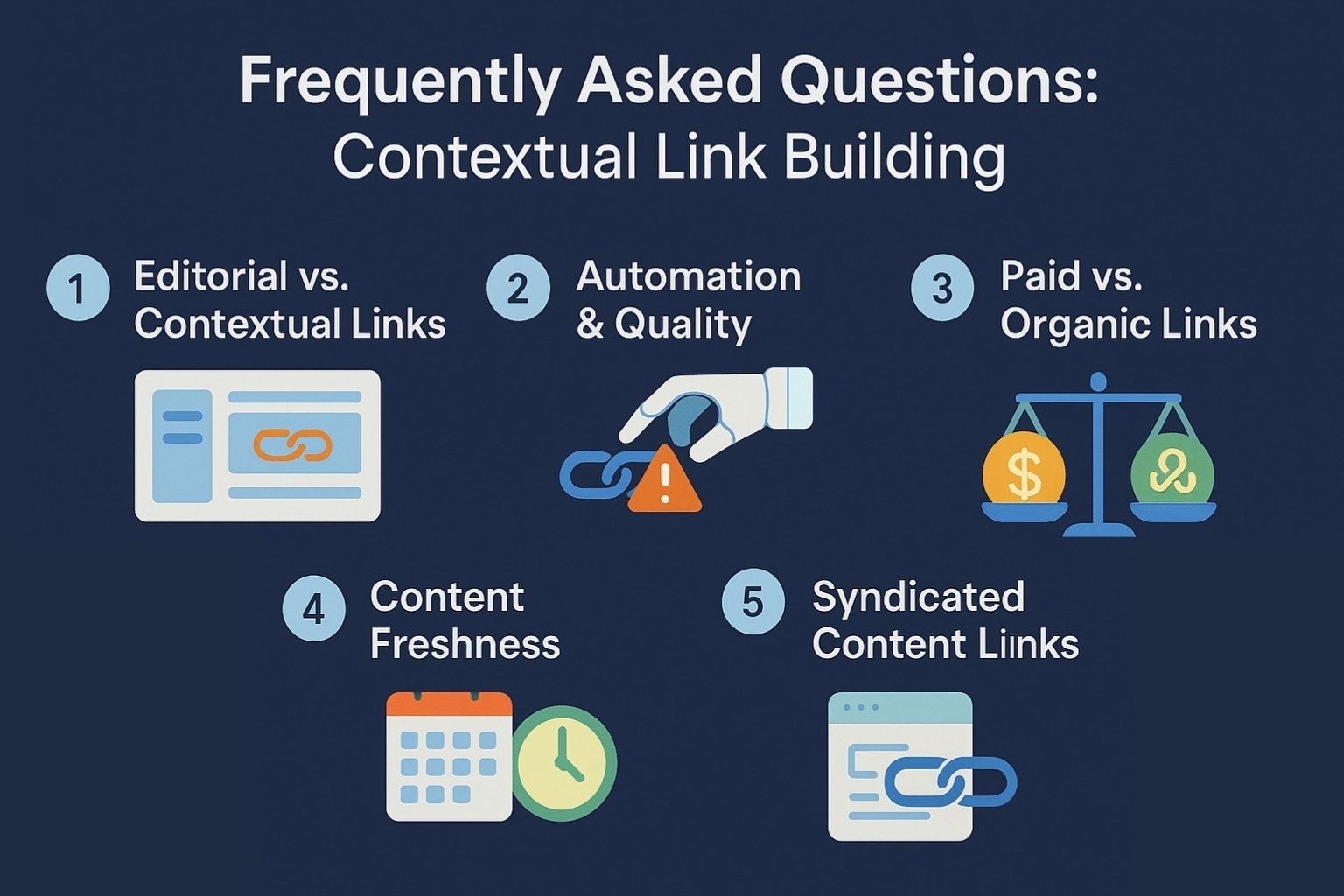
Frequently Asked Questions (FAQ)
1. How do contextual links compare to editorial backlinks placed in author bios or bylines?
Author bios and bylines can be relevant, but they lack the semantic depth of in-content contextual links. This FAQ could explore the nuance between editorial presence and contextual relevance.
2. Is it possible to automate contextual link building without compromising quality?
With the rise of AI, this is a frequent question. A detailed answer would discuss the limits of automation in relation to editorial standards and link placement quality.
3. How does Google distinguish between paid contextual links and organic ones?
This dives into a compliance-related concern many professionals have, especially those scaling placements across publisher networks or using influencer amplification.
4. How does content freshness affect the value of a contextual backlink?
Many SEOs wonder if links from newly published content are weighted differently than those from older, evergreen articles. This question opens a conversation about recency, indexing, and engagement.
5. Can contextual links in syndicated or republished content still pass SEO value?
This is a niche but important topic for enterprise brands that distribute content via syndication partners. It addresses canonical tags, duplication, and how search engines attribute link equity.
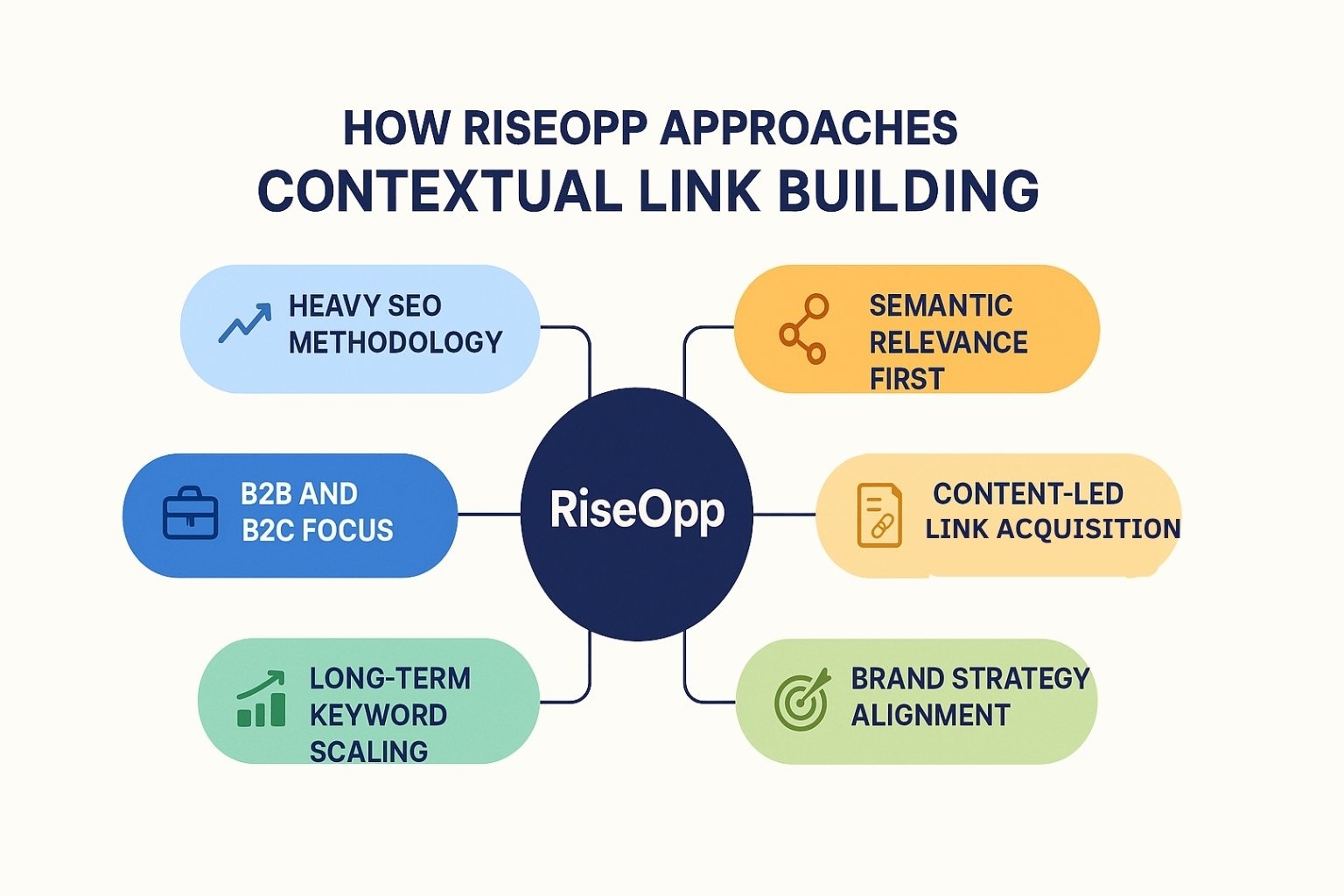
How We Approach Contextual Link Building at RiseOpp
At RiseOpp, contextual link building is a critical component of the SEO strategies we develop for our clients. We don’t approach link building as a standalone activity; we view it as one of many interconnected pillars in a broader, long-term growth strategy. Our proprietary Heavy SEO methodology is designed to rank websites for tens of thousands of keywords over time, and contextual backlinks play a central role in making that scale possible.
Because we operate as both a Fractional CMO and SEO services company, we bring a strategic lens to every campaign. Whether we’re working with a B2B SaaS company or a consumer brand, we don’t just ask where to place a link; we ask what story that link helps tell, how it supports brand positioning, and where it fits in the content ecosystem. That’s the kind of thinking that contextual link building demands, and that’s the kind of strategy we build.
If you’re looking to grow your visibility through a smarter SEO link building strategy, one that prioritizes context, semantic relevance, and long-term ranking power, we’d love to talk. Reach out to us at RiseOpp and let’s build a scalable, AI-aware marketing strategy that actually performs.
Comments are closed