- Industry marketing strategy depends on sector-specific factors such as buyer behavior, regulation, product complexity, and decision risk.
- Effective industry marketing strategies vary widely: technology and finance emphasize education and trust, while retail and travel emphasize experience.
- Strong industry marketing strategies align channels, messaging, and tactics with the structural realities of each market.
Marketing strategy changes dramatically from one industry to another. Over the years I have worked with organizations in multiple sectors, and one pattern appears repeatedly. The marketing frameworks that succeed in one industry often fail completely in another.
Technology companies rely on educational content and product-led growth. Healthcare organizations prioritize trust and patient relationships. Retail brands compete through customer experience and personalization. Travel marketing depends on visual storytelling that inspires emotional engagement.
Professionals who design marketing strategies must understand the structural dynamics of their industries. Without that context, even well-designed marketing programs struggle to deliver meaningful results.
The reality is that many organizations never reach that level of clarity. According to Optimizely marketing statistics (2025), 47% of businesses do not have a clearly defined digital marketing strategy.
In this guide I explore how marketing strategies operate across several major industries. Instead of presenting generic marketing advice, I focus on the strategic realities that shape each industry’s approach to marketing.
The industries covered include:
- Technology
- Healthcare
- Retail
- Real estate
- Education
- Finance
- Automotive
- Food and beverage
- Travel and hospitality
For each industry I examine:
- Core marketing challenges
- Proven marketing strategies
- Digital marketing channels
- Traditional marketing approaches
- Emerging trends shaping the future of the industry
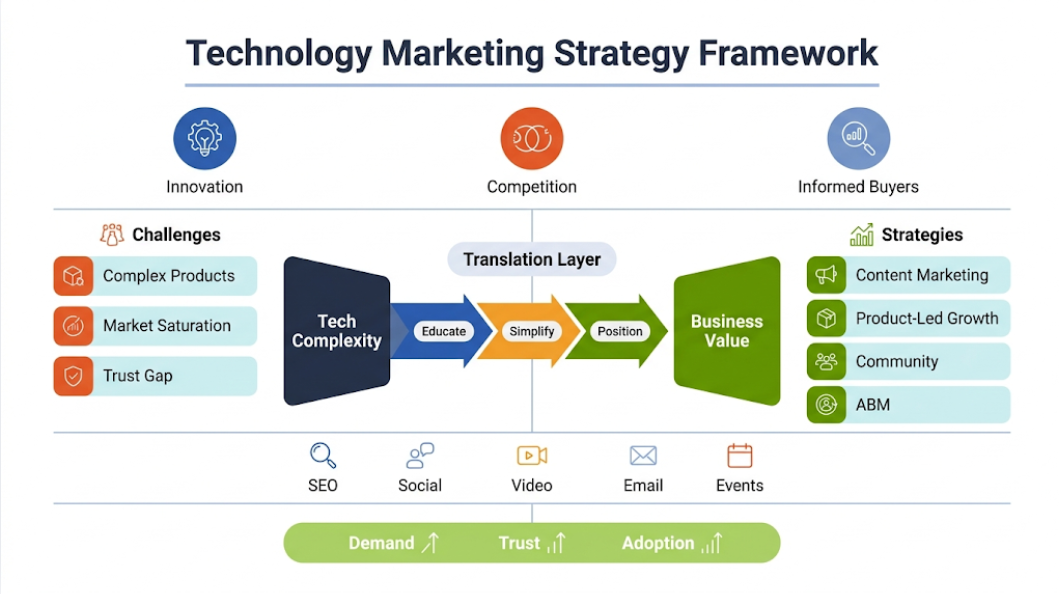
Technology Industry Marketing Strategy
Overview of the Technology Marketing Environment
Technology companies operate in an environment defined by rapid innovation, aggressive competition, and highly informed buyers. Unlike many consumer markets, technology products often solve problems that customers do not yet fully understand.
When I work with technology companies, one challenge appears almost immediately. Product teams assume that innovation will naturally generate demand. In reality, technological innovation requires extensive market education.
Technology marketing therefore functions as a translation layer between technical complexity and practical value. Marketing teams must convert engineering capabilities into business outcomes that customers understand.
Another defining characteristic of technology marketing involves the behavior of buyers. Whether the audience consists of enterprise CIOs or startup founders, technology buyers conduct extensive research before making decisions. They read technical documentation, analyze product comparisons, and consult peers before committing to a purchase.
This research-driven purchasing behavior strongly influences marketing strategy.
Marketing Challenges in the Technology Industry
Explaining Complex Products
Many technology products involve sophisticated architectures and technical concepts. Artificial intelligence systems, cybersecurity platforms, cloud infrastructure tools, and developer platforms cannot be marketed effectively through simple advertising messages.
Customers must understand both the problem and the solution.
Marketing strategies therefore rely heavily on educational content that explains how the technology works and why it matters.
Competitive Saturation
Once a technology category demonstrates market potential, competitors quickly enter the space. Markets such as project management software, CRM systems, and AI tools now contain hundreds of competing products.
Differentiation becomes essential. Marketing teams must communicate a clear and compelling value proposition that distinguishes the product from alternatives.
Establishing Trust
Enterprise technology purchases involve significant financial and operational risk. Buyers look for signals that demonstrate reliability and credibility.
Trust signals often include:
- customer case studies
- product certifications
- analyst endorsements
- detailed documentation
- transparent pricing models
Marketing programs must reinforce these signals consistently.
Core Technology Marketing Strategies
Content Marketing as Market Education
Content marketing sits at the center of most successful technology and SaaS marketing programs.
Technology buyers actively search for information that helps them understand problems and evaluate solutions. This behavior continues to shape how companies invest in marketing. According to HubSpot’s State of Marketing Report (2026), 50% of marketers plan to increase their investment in content marketing, reinforcing its role as a primary growth channel.
In practice, this means companies that fail to build strong content ecosystems will struggle to compete in search visibility, education, and demand generation.
Educational content allows companies to capture this demand while positioning themselves as experts.
Common content formats include:
- technical blog articles
- industry research reports
- whitepapers and guides
- product comparison analyses
- customer case studies
These resources guide buyers through the evaluation process.
Product-Led Growth
Many modern technology companies rely on product experience as their primary marketing engine.
Product-led growth strategies allow potential users to experience the product before purchasing. Free trials and freemium models reduce barriers to entry while encouraging adoption.
Companies such as Slack and Dropbox expanded rapidly by allowing users to explore the product before committing to paid plans.
Developer and Community Marketing
Technology ecosystems increasingly depend on developer communities.
Companies that provide APIs, development tools, or open-source platforms often cultivate active communities where developers share knowledge and build projects together.
Marketing teams support these communities through:
- documentation
- technical tutorials
- community forums
- developer events
This approach creates long-term advocacy among technical audiences.
Account-Based Marketing
Enterprise technology companies frequently focus on high-value target accounts rather than broad lead generation.
Account-based marketing involves identifying organizations with strong potential fit and delivering highly personalized campaigns that address the needs of decision-makers within those companies.
These campaigns often combine content marketing, targeted advertising, and direct sales outreach.
Digital Marketing Channels for Technology Companies
Search Engine Optimization
Technology buyers frequently begin their research through search engines. Queries may involve specific problems or comparisons between competing products.
SEO strategies therefore target informational B2B search queries related to industry challenges.
High-quality educational content helps companies appear during these research stages.
Social Media and Professional Networks
Professional networks such as LinkedIn play an important role in B2B technology marketing.
Companies share thought leadership articles, product updates, and industry insights through these platforms.
Social media also facilitates interaction with developer communities and technology enthusiasts.
Video and Webinar Marketing
Video content helps simplify complex technical concepts.
Webinars allow companies to demonstrate products, answer questions, and engage directly with potential customers.
Recorded demonstrations and tutorials also serve as long-term educational resources.
Email Marketing and Automation
Technology companies rely heavily on marketing automation systems that nurture prospects through long purchasing cycles.
Automated email sequences deliver relevant content based on user behavior and engagement patterns.
Traditional Marketing Channels in the Technology Industry
Despite the importance of digital channels, traditional marketing approaches remain influential in technology markets.
Industry Conferences and Trade Shows
Technology conferences provide opportunities for product demonstrations and networking with potential customers.
These events also attract journalists and analysts who shape industry narratives.
Analyst Relations
Industry analysts influence enterprise purchasing decisions. Technology companies invest significant effort in maintaining relationships with analyst firms.
Positive evaluations in analyst reports can dramatically increase credibility.
Media Relations
Coverage in respected technology publications can introduce products to large professional audiences.
Public relations strategies therefore remain an important component of technology marketing.
Marketing Trends Shaping Technology Industries
AI-Driven Marketing
Artificial intelligence now assists marketing teams in analyzing customer behavior and delivering personalized experiences.
AI systems can recommend content, predict purchasing intent, and optimize campaign performance.
Short-Form Educational Content
Short video formats help explain complex ideas quickly. Technology companies increasingly use short-form videos across social platforms to introduce products and highlight use cases.
Community-Led Growth
Many companies now prioritize building active user communities that contribute ideas, share knowledge, and promote products organically.
These communities strengthen customer loyalty and expand product ecosystems.
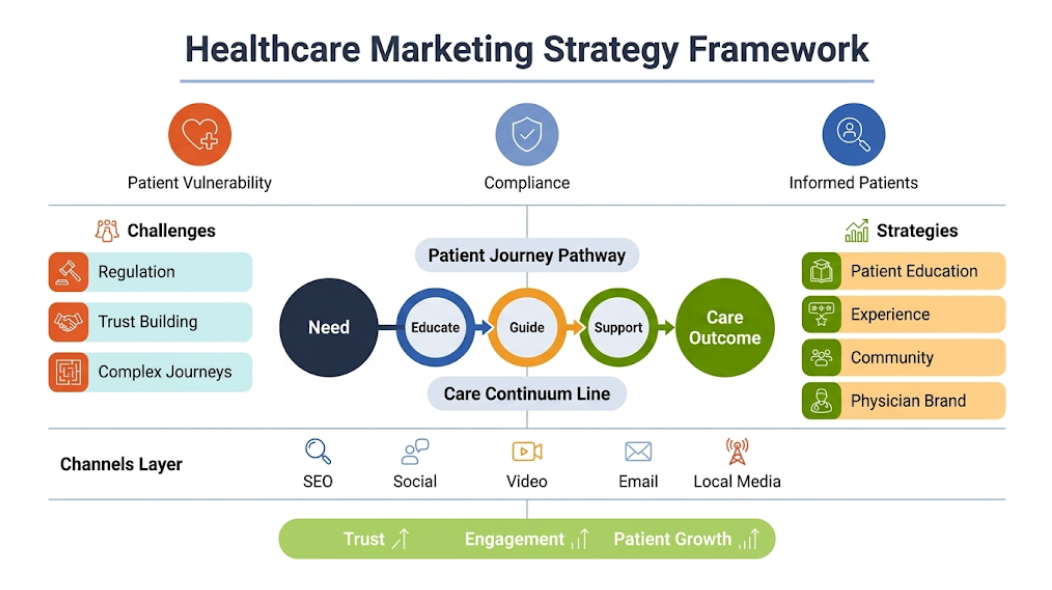
Healthcare Industry Marketing Strategy
Overview of the Healthcare Marketing Environment
Healthcare marketing operates under conditions very different from most industries. When people interact with healthcare providers they are not simply shopping for products. They are often seeking solutions during moments of vulnerability, uncertainty, or urgent need.
That reality fundamentally shapes how healthcare organizations approach marketing.
Healthcare institutions must balance three priorities simultaneously. They must communicate medical expertise, maintain strict regulatory compliance, and build genuine trust with patients. The messaging tone must remain informative and empathetic rather than promotional.
Another important shift has occurred over the last decade. Patients increasingly behave like informed consumers. They compare providers online, read reviews, evaluate treatment options, and expect convenient digital access to care.
Healthcare marketing strategies therefore combine educational communication, reputation management, and patient experience design.
Marketing Challenges in the Healthcare Industry
Regulatory and Compliance Constraints
Healthcare organizations operate under strict regulatory frameworks. Marketing messages must comply with laws related to patient privacy, medical claims, and advertising disclosures.
Marketing teams frequently collaborate with legal and compliance departments to ensure communications remain accurate and appropriate.
These requirements slow campaign development but protect patient trust.
Building Trust in a High-Stakes Environment
Healthcare decisions involve significant emotional and financial consequences. Patients must feel confident that providers possess both competence and compassion.
Trust signals play a critical role in healthcare marketing. These signals include physician credentials, patient testimonials, hospital rankings, and affiliations with respected medical institutions.
Complex Patient Journeys
Healthcare journeys rarely follow simple paths. Patients may interact with primary care physicians, specialists, diagnostic centers, pharmacies, and insurers before resolving a single medical issue.
Marketing strategies must therefore support patients across multiple stages of the care journey.
Core Healthcare Marketing Strategies
Patient Education as Content Strategy
Educational content forms the foundation of healthcare marketing.
Patients actively search for information about symptoms, treatments, and preventive care. Healthcare organizations that provide reliable information become trusted sources during the research process.
Common content formats include:
- symptom explanation guides
- treatment option comparisons
- physician interviews
- wellness and prevention articles
- disease awareness campaigns
Educational content also improves search visibility and attracts patients earlier in the decision process.
Patient Experience Marketing
Patient experience now influences healthcare reputation as strongly as clinical quality.
Satisfied patients often share experiences through online reviews and personal recommendations. Healthcare organizations therefore integrate marketing with patient experience management.
Many hospitals actively monitor patient feedback and highlight positive experiences in marketing communications.
Community Engagement
Healthcare institutions maintain strong connections with local communities. Community outreach programs allow providers to demonstrate commitment to public health.
Examples include:
- health education seminars
- vaccination drives
- community screenings
- wellness events
These initiatives strengthen relationships while increasing brand awareness.
Physician Brand Development
Physicians often represent the most credible voices within healthcare marketing.
Hospitals and clinics frequently feature physicians in educational content, interviews, and public discussions. When physicians share expertise publicly, they reinforce the credibility of the organization they represent.
Digital Marketing Channels in Healthcare
Search Engine Optimization for Health Queries
Patients often begin healthcare journeys by searching for information online. Queries may involve symptoms, treatments, or local provider recommendations.
Healthcare organizations optimize educational content around these queries to attract patients during early research stages.
Local search optimization also ensures that clinics appear when patients search for nearby providers.
Social Media for Education and Engagement
Social platforms allow healthcare organizations to communicate directly with communities.
Healthcare social media content often includes:
- health tips and preventive advice
- awareness campaigns for specific conditions
- physician Q&A sessions
- patient success stories
These posts humanize healthcare organizations while providing useful information.
Video-Based Patient Education
Video content simplifies complex medical explanations.
Short educational videos, animated treatment explanations, and physician-led discussions help patients understand procedures and conditions more clearly.
Video also performs well across social platforms and healthcare websites.
Email and Patient Communication Platforms
Healthcare organizations maintain ongoing communication with patients through email and patient portals.
Typical communications include:
- appointment reminders
- health screening recommendations
- wellness newsletters
- updates on available services
These messages strengthen long-term patient engagement.
Traditional Healthcare Marketing Channels
Despite the growth of digital communication, traditional channels remain influential in healthcare.
Television and Radio Campaigns
Large hospital systems frequently use television and radio advertising to build awareness of specialized services such as cancer centers, heart institutes, or emergency facilities.
These campaigns often focus on patient stories rather than technical explanations.
Local Community Advertising
Billboards, local newspapers, and transit advertising remain effective for promoting healthcare facilities within regional markets.
Healthcare advertising typically highlights accessibility, expertise, and compassionate care.
Physician Referral Networks
Professional referrals continue to drive a significant portion of patient acquisition. Marketing teams often maintain relationships with referring physicians through educational programs and professional collaboration.
Emerging Healthcare Marketing Trends
AI-Powered Patient Engagement
Healthcare organizations increasingly use predictive analytics to identify patients who may benefit from specific services.
Automated systems can remind patients about preventive screenings or follow-up appointments.
Telehealth Marketing
Telemedicine has expanded rapidly. Healthcare providers now promote virtual consultations as convenient alternatives for many types of care.
Privacy-Centered Digital Marketing
Healthcare marketers are adopting privacy-first approaches to digital advertising that rely on contextual targeting rather than invasive data collection.
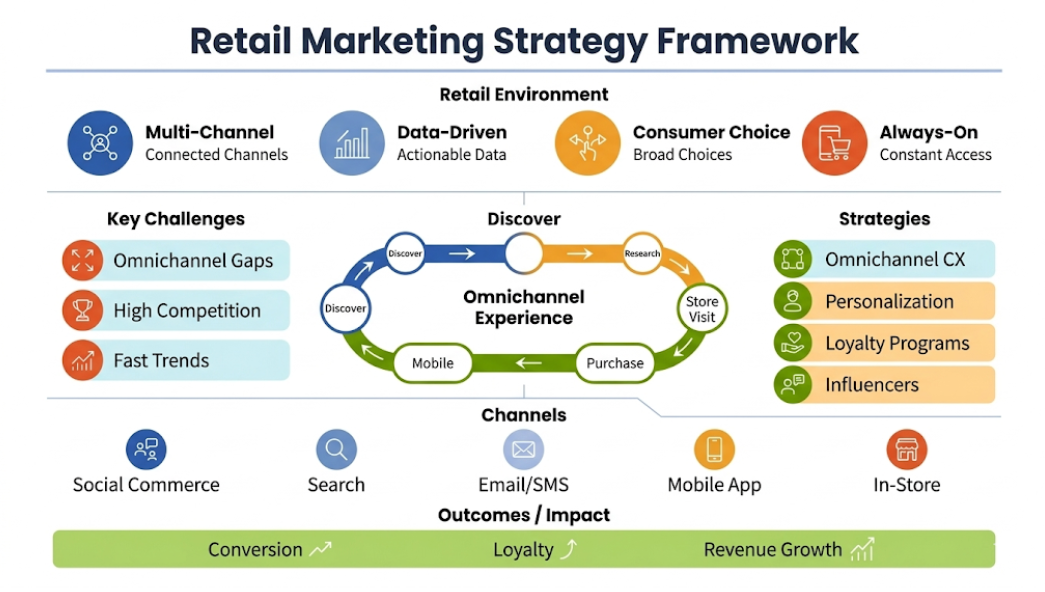
Retail Industry Marketing Strategy
Overview of the Retail Marketing Environment
Retail marketing revolves around influencing consumer purchasing decisions in environments filled with alternatives.
Consumers today encounter retail brands across multiple channels, including ecommerce websites, physical stores, social media platforms, and mobile applications. Successful retailers design marketing strategies that integrate all these touchpoints into a seamless customer experience.
Retail marketing has also become increasingly data-driven, which makes it even more important to separate content strategy from content execution.
Customer data collected through loyalty programs and ecommerce platforms allows retailers to personalize communication and recommendations.
Marketing Challenges in Retail
Omnichannel Consumer Behavior
Consumers rarely follow linear purchasing paths. A shopper may discover a product on social media, read reviews online, visit a physical store to see it, and complete the purchase later through a mobile app.
Retail marketing strategies must connect these interactions into a consistent experience.
Intense Competition
Retail markets often contain numerous brands selling similar products. Retailers must therefore differentiate themselves through branding, customer service, and unique shopping experiences.
Rapid Trend Cycles
Consumer preferences shift quickly, particularly in fashion and lifestyle categories. Retail marketing teams must respond rapidly to emerging cultural trends.
Core Retail Marketing Strategies
Omnichannel Customer Experience
Retailers increasingly integrate physical and digital shopping environments.
Common omnichannel features include:
- buy online, pick up in store
- real-time inventory visibility
- integrated loyalty programs
- cross-channel promotions
These systems allow customers to shop according to their preferences.
Personalization Through Data
Customer data allows retailers to personalize marketing communications and product recommendations.
Retailers analyze browsing behavior, purchase history, and engagement patterns to deliver relevant promotions.
Personalized experiences significantly improve conversion rates and customer loyalty, making them central to any effective growth marketing strategy.
Loyalty Programs
Loyalty programs encourage repeat purchases and long-term customer relationships.
Members often receive:
- reward points
- exclusive discounts
- early access to new products
These incentives increase customer lifetime value.
Influencer and Creator Partnerships
Retail brands frequently collaborate with creators who introduce products to engaged audiences.
Influencers demonstrate how products fit into everyday life, making marketing messages more relatable.
Digital Marketing Channels in Retail
Social Commerce
Social platforms now function as retail channels where consumers can discover and purchase products without leaving the platform.
Retailers create shoppable posts and collaborate with influencers to drive sales directly from social content.
Search Marketing
Search engines remain a primary channel for product discovery. Retailers optimize product pages and category pages for relevant search queries.
Paid search advertising captures consumers with strong purchase intent.
Email and SMS Marketing
Direct communication channels such as email and SMS allow retailers to promote sales events, send personalized offers, and remind customers about abandoned carts.
Mobile Applications
Retail apps often combine ecommerce functionality with loyalty programs and personalized recommendations.
Push notifications allow retailers to communicate promotions instantly.
Traditional Retail Marketing Channels
In-Store Merchandising
Physical stores remain powerful marketing environments. Store layout, product placement, lighting, and visual displays influence customer behavior.
Retailers carefully design these elements to encourage exploration and impulse purchases.
Print Catalogs and Direct Mail
Some retailers still use printed catalogs to showcase seasonal collections and inspire product discovery.
Direct mail campaigns also deliver coupons and promotional offers to targeted households.
Outdoor Advertising
Billboards and transit advertising help retailers build brand awareness within local markets.
These campaigns often promote major sales events.
Emerging Retail Marketing Trends
Live Shopping Experiences
Live-stream shopping events combine entertainment and product demonstration. Influencers present products while viewers purchase them in real time.
Augmented Reality Product Experiences
Augmented reality technology allows customers to visualize products in their own environments before purchasing.
Examples include virtual furniture placement and cosmetic try-on tools.
AI-Powered Merchandising
Artificial intelligence now assists retailers in predicting demand, optimizing pricing strategies, and recommending products.
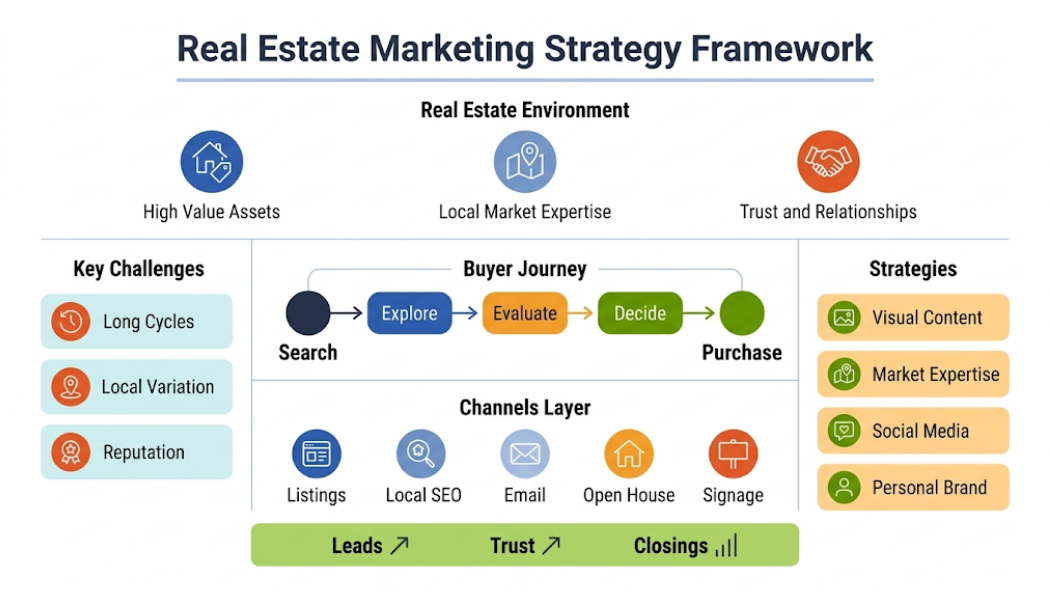
Real Estate Industry Marketing Strategy
Overview of Real Estate Marketing
Real estate marketing combines property promotion with personal reputation management.
Real estate agents must not only showcase properties but also establish themselves as trusted advisors who guide buyers and sellers through complex transactions.
Because property purchases involve significant financial commitments, buyers conduct extensive research before making decisions.
Marketing Challenges in Real Estate
High-Value Purchase Decisions
Property purchases represent some of the largest financial transactions individuals undertake. Buyers carefully evaluate multiple properties before making decisions.
Marketing strategies must support long evaluation cycles.
Local Market Dynamics
Real estate markets vary significantly between regions. Marketing strategies must reflect local property values, neighborhood characteristics, and economic conditions.
Trust and Reputation
Clients often select agents based on reputation and personal relationships. Personal branding, therefore, becomes essential.
Core Real Estate Marketing Strategies
Visual Property Presentation
Professional photography and video significantly influence property perception.
High-quality visuals allow buyers to imagine living in the property.
Common visual marketing assets include:
- cinematic walkthrough videos
- drone photography
- staged interior images
- interactive virtual tours
Local Market Expertise
Agents often publish local housing market insights to demonstrate expertise.
Content may include neighborhood guides, housing price trends, and investment advice.
Social Media Property Marketing
Social platforms allow agents to showcase listings and highlight lifestyle aspects of neighborhoods.
Short video tours and behind-the-scenes property content often attract significant engagement.
Digital Marketing Channels in Real Estate
Property Search Platforms
Online platforms allow buyers to browse listings and compare properties.
Agents optimize listings with detailed descriptions, professional photography, and competitive pricing information.
Local SEO
Search engine optimization ensures that agents appear when buyers search for properties in specific locations, which is why local SEO performance matters so much in real estate.
Email Marketing
Agents maintain contact with prospective buyers and previous clients through newsletters featuring new listings and market updates.
Traditional Real Estate Marketing Channels
Yard Signs
Property signage remains one of the most recognizable marketing tools in real estate.
Open House Events
Open houses allow buyers to experience properties firsthand while interacting with agents.
Direct Mail Campaigns
Postcards announcing new listings or recent sales help agents build local recognition.
Emerging Real Estate Marketing Trends
Virtual Reality Property Tours
Virtual tours allow buyers to explore properties remotely, which is especially valuable for long-distance buyers.
AI-Based Lead Targeting
Predictive analytics can identify homeowners likely to sell properties based on demographic and behavioral patterns.
Real Estate Influencer Content
Some agents build large audiences by sharing real estate insights and property tours through social media platforms.
Education Industry Marketing Strategy
Overview of the Education Marketing Environment
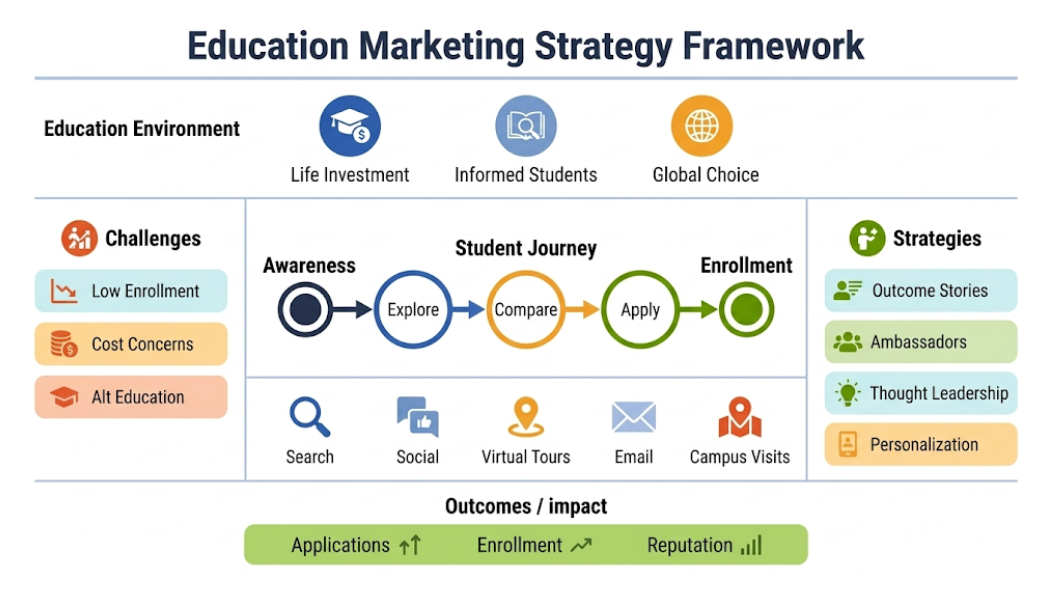
Marketing within the education sector operates under conditions very different from most commercial industries. Institutions are not simply selling a product or service. They are offering long-term intellectual development, career pathways, and life opportunities.
Students and families treat education decisions with a level of scrutiny similar to major financial investments. They examine reputation, faculty expertise, employment outcomes, campus culture, and financial cost before committing to an institution.
Over the past decade I have observed a major shift in how students approach these decisions. Prospective students now behave like informed consumers. They research programs online, compare universities globally, and analyze return on investment before applying.
Educational institutions therefore require marketing strategies that combine academic credibility with modern digital engagement.
Marketing Challenges in the Education Industry
Declining Enrollment in Some Markets
Many regions face demographic changes that reduce the number of traditional college-age students. Universities must compete more aggressively for applicants.
This shift has intensified the importance of brand positioning and targeted recruitment strategies.
Rising Cost Concerns
Tuition costs have increased significantly across many countries. Families increasingly question whether educational investments justify the financial commitment.
Marketing strategies must therefore communicate career outcomes and long-term value clearly.
Competition from Alternative Education Models
Online learning platforms, certification programs, and employer-sponsored training initiatives now compete with traditional academic institutions.
Universities must explain how their programs offer deeper educational value and career preparation.
Core Education Marketing Strategies
Storytelling Through Student Outcomes
One of the most effective education marketing strategies involves highlighting the achievements of graduates.
Institutions frequently showcase:
- alumni success stories
- employment statistics
- research breakthroughs
- student entrepreneurial achievements
These narratives demonstrate the real-world impact of the institution.
Student Ambassador Programs
Prospective students often trust current students more than official institutional messaging.
Many universities therefore recruit student ambassadors who participate in recruitment activities such as campus tours, virtual discussions, and social media storytelling.
These programs allow prospective students to hear authentic perspectives.
Academic Thought Leadership
Faculty expertise represents one of the strongest intellectual assets of educational institutions.
Marketing teams collaborate with professors to publish research insights, opinion articles, and conference presentations.
When faculty members become visible thought leaders, institutional reputation grows alongside them.
Personalized Recruitment Communication
Enrollment marketing now relies heavily on data-driven communication systems.
Customer relationship management platforms allow institutions to track prospective student behavior and deliver personalized communication during the recruitment process.
Digital Marketing Channels in Education
Search Marketing for Program Discovery
Prospective students frequently begin their research through search engines.
Queries often include program types, degree options, and career paths.
Institutions optimize program pages and academic content to capture these search queries as part of a broader content marketing strategy.
Paid search campaigns also target high-intent prospects.
Social Media and Campus Life Marketing
Social platforms play a central role in shaping perceptions of student life.
Universities often showcase:
- campus events
- student projects
- dorm life
- extracurricular activities
These posts help prospective students imagine themselves within the campus community.
Virtual Campus Experiences
Virtual campus tours allow students to explore facilities remotely.
Interactive sessions with faculty and admissions teams provide additional opportunities for engagement.
Email Marketing and Application Funnels
Once prospective students express interest, institutions guide them through application processes using automated email sequences.
These communications include reminders about deadlines, financial aid information, and invitations to recruitment events.
Traditional Education Marketing Channels
Campus Visits
Physical visits remain one of the most powerful influences on enrollment decisions.
Universities invest heavily in creating welcoming campus visit experiences.
High School Outreach
Admissions representatives frequently visit high schools and attend college fairs to introduce academic programs.
These interactions build early awareness among potential applicants.
Printed Recruitment Materials
Many institutions continue to distribute printed brochures and viewbooks highlighting academic programs and campus culture.
Emerging Trends in Education Marketing
Hyper-Personalized Recruitment
Advanced analytics allow institutions to tailor communication based on student interests, geographic location, and academic background.
Global Student Recruitment
International students represent an increasingly important segment for many universities.
Institutions now run digital campaigns targeting specific regions worldwide.
Lifelong Learning Programs
Educational institutions increasingly market short courses and professional development programs aimed at working adults.
Finance Industry Marketing Strategy
Overview of the Financial Services Marketing Environment
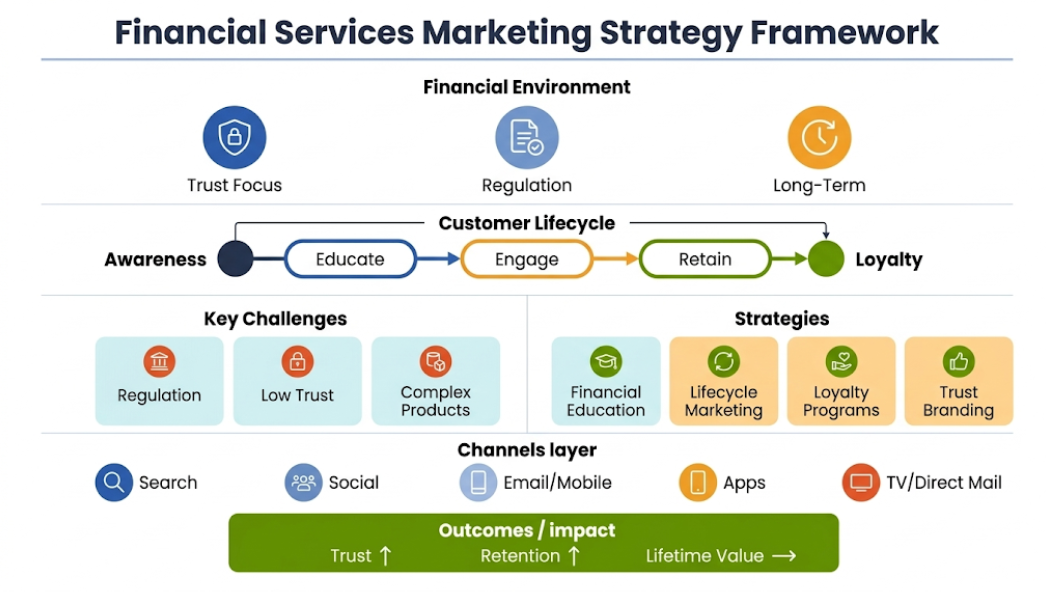
Financial services marketing revolves around trust, stability, and long-term relationships, which makes disciplined marketing management especially important. Unlike industries where purchases occur frequently, financial decisions often involve long-term commitments.
Customers may maintain relationships with banks, insurance companies, and investment firms for decades. Marketing strategies must therefore focus not only on acquisition but also on retention.
Financial institutions also operate within highly regulated environments where transparency and accuracy are essential.
Marketing Challenges in Financial Services
Regulatory Oversight
Financial marketing must comply with strict regulations regarding claims, disclosures, and consumer protection.
Marketing teams collaborate closely with legal departments to ensure compliance.
Consumer Skepticism
Public trust in financial institutions fluctuates depending on economic conditions and past industry controversies.
Marketing campaigns must emphasize transparency and reliability.
Product Complexity
Financial products often involve technical concepts that customers may not fully understand.
Educational marketing therefore becomes a central component of financial communication.
Core Financial Marketing Strategies
Financial Education as Marketing
Educational content helps customers understand financial concepts while positioning institutions as trusted advisors.
Topics often include:
- budgeting techniques
- investment basics
- retirement planning
- credit management
Providing valuable information strengthens credibility.
Customer Lifecycle Marketing
Financial institutions design marketing strategies around major life events.
These may include opening first bank accounts, purchasing homes, planning retirement, or managing family finances.
Understanding these life stages allows marketers to deliver relevant services.
Loyalty and Relationship Programs
Banks and financial institutions encourage long-term relationships through loyalty initiatives.
These may include:
- rewards programs
- personalized financial advice
- exclusive account benefits
Such programs increase customer lifetime value.
Brand Trust Campaigns
Financial marketing frequently emphasizes reliability, security, and institutional history.
Messaging often highlights stability and commitment to customer success.
Digital Marketing Channels in Finance
Search Marketing for Financial Advice
Consumers frequently search for financial advice online.
Financial institutions create educational resources that address queries related to loans, investments, and financial planning.
Social Media Thought Leadership
Executives and financial experts increasingly share insights through professional networks.
Thought leadership content reinforces institutional authority.
Personalized Email and Mobile Communication
Banks maintain detailed customer data that enables personalized communication through email and mobile applications.
Customers may receive spending insights, savings suggestions, and product recommendations.
Financial Technology Platforms
Mobile banking apps serve as key communication channels.
Within these apps institutions promote services and deliver financial insights.
Traditional Marketing Channels in Finance
Television Advertising
Financial companies frequently use television campaigns to reach broad audiences.
These advertisements often combine emotional storytelling with financial messaging.
Direct Mail Campaigns
Credit card offers and loan promotions continue to reach households through direct mail campaigns.
Sponsorship and Community Engagement
Financial institutions frequently sponsor local events and community initiatives to strengthen brand recognition.
Emerging Trends in Financial Marketing
AI-Driven Personalization
Artificial intelligence helps financial institutions analyze customer behavior and recommend appropriate products.
Fintech Collaboration
Traditional banks increasingly collaborate with financial technology companies to expand digital capabilities.
Financial Influencers
Personal finance creators on social platforms now influence consumer financial decisions.
Automotive Industry Marketing Strategy
Overview of Automotive Marketing
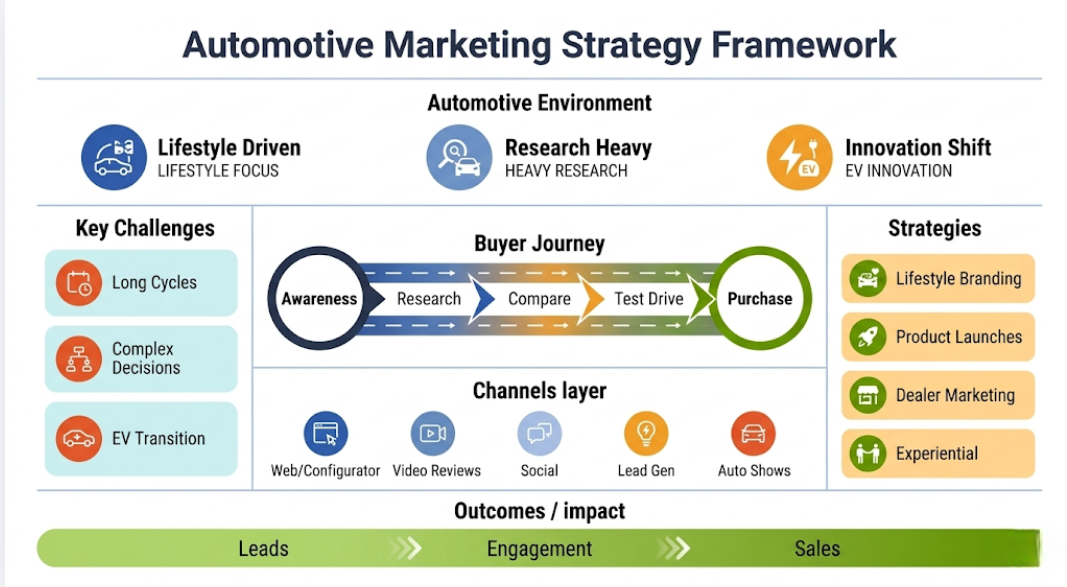
Automotive marketing combines product innovation, lifestyle branding, and experiential engagement.
Vehicles serve not only as transportation tools but also as symbols of identity, status, and personal lifestyle. Marketing campaigns therefore blend technical specifications with emotional storytelling.
Consumers also spend significant time researching vehicles before making purchases. Marketing strategies must support this research journey.
Marketing Challenges in the Automotive Industry
Long Purchase Cycles
Consumers purchase vehicles infrequently. Marketing strategies must maintain brand awareness until customers enter purchasing cycles.
Complex Decision Processes
Car buyers evaluate multiple factors including vehicle performance, safety features, financing options, and dealership reputation.
Marketing must address these considerations throughout the decision process.
Transition to Electric Vehicles
The automotive industry is currently undergoing a major technological transition toward electric vehicles.
Marketing campaigns must educate consumers about charging infrastructure, battery performance, and environmental benefits.
Core Automotive Marketing Strategies
Lifestyle Branding
Automotive advertising often emphasizes lifestyle imagery.
Vehicles appear in environments that reflect adventure, luxury, or family experiences.
These images help consumers imagine how vehicles fit into their lives.
Product Launch Campaigns
New vehicle releases generate significant marketing attention.
Manufacturers coordinate global launch campaigns that include teaser videos, media previews, and influencer test drives.
Dealership Marketing Collaboration
Automakers collaborate closely with dealerships to drive local sales.
Dealership marketing often includes promotional pricing events and test-drive experiences.
Experiential Marketing
Test drives remain one of the most persuasive marketing tools in the automotive industry.
Events allow potential buyers to experience vehicles in real-world environments.
Digital Marketing Channels in Automotive
Online Vehicle Research Platforms
Consumers now conduct extensive vehicle research online before visiting dealerships.
Automakers invest heavily in interactive websites and digital product configurators.
Video Marketing and Influencer Reviews
Automotive reviewers on video platforms strongly influence consumer perception.
Manufacturers frequently collaborate with reviewers who demonstrate vehicles in detail.
Social Media Engagement
Automotive brands maintain online communities where enthusiasts share experiences and discuss vehicle features.
Digital Lead Generation
Online campaigns capture leads from consumers interested in scheduling test drives or requesting information.
Traditional Automotive Marketing Channels
Television Advertising
Automotive brands continue to invest heavily in television campaigns, particularly during major sporting events.
Outdoor Advertising
Billboards placed along highways showcase vehicles in real driving contexts.
Auto Shows and Industry Events
Auto shows allow manufacturers to present new vehicles and technologies directly to consumers and journalists.
Emerging Trends in Automotive Marketing
Electric Vehicle Education
Marketing campaigns increasingly focus on explaining electric vehicle technology and sustainability benefits.
Online Vehicle Purchasing
Some manufacturers now allow customers to complete much of the purchasing process online.
Connected Vehicle Marketing
Connected vehicles allow manufacturers to communicate directly with owners through digital services and updates.
Food and Beverage Marketing Strategy
Overview of the Food and Beverage Marketing Environment
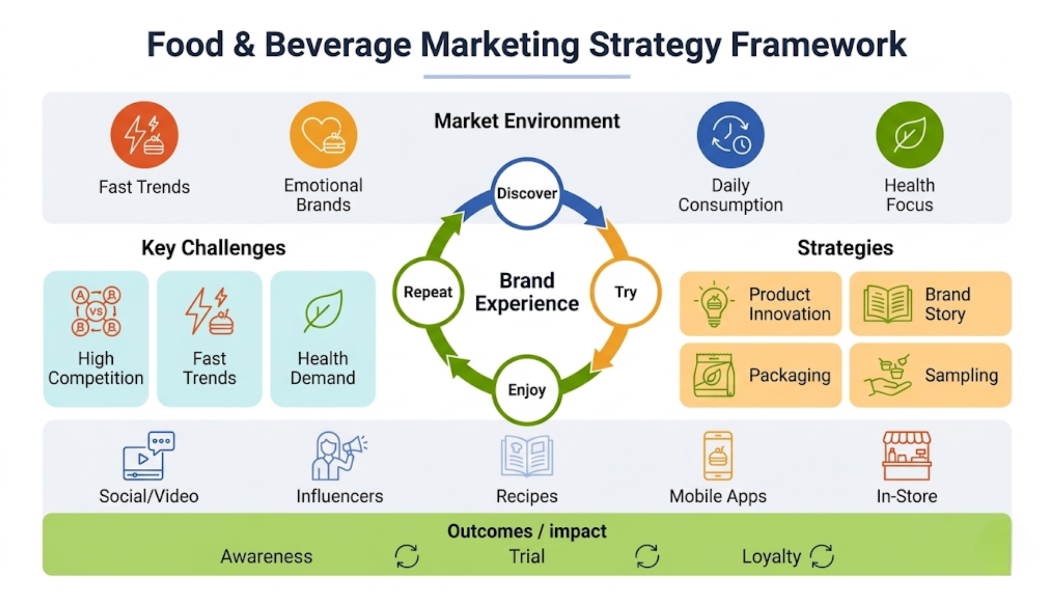
Food and beverage marketing operates at an unusually fast pace compared to many other industries. Consumer preferences evolve quickly, new brands appear constantly, and cultural trends influence purchasing behavior almost immediately.
When I evaluate successful food and beverage brands, I rarely see marketing strategies focused purely on the product itself. Instead, the strongest brands position themselves around experiences, lifestyle signals, or emotional associations. A beverage brand might represent energy and adventure. A coffee brand might symbolize comfort and daily routine. A restaurant brand might focus on community and indulgence.
This emotional dimension matters because food purchases happen frequently. Unlike cars or financial products, consumers interact with food brands every day. The goal of marketing therefore becomes long-term familiarity and brand affinity rather than one-time transactions.
At the same time, the industry now faces powerful shifts driven by health awareness, sustainability expectations, and social media influence.
Marketing Challenges in the Food and Beverage Industry
Highly Competitive Markets
Supermarkets and restaurant markets contain thousands of competing products. On a retail shelf, brands compete for attention within seconds.
Packaging, branding, and shelf placement therefore play enormous roles in consumer decision-making.
Rapid Trend Cycles
Food trends move quickly. Viral recipes, diet movements, and cultural food moments can spread across the world within days through social media.
Marketing teams must monitor these trends closely and respond quickly.
Health and Sustainability Expectations
Consumers increasingly evaluate food brands based on nutritional value, ingredient sourcing, and environmental impact.
Brands must communicate transparency about ingredients while maintaining the appeal of indulgence and flavor.
Core Food and Beverage Marketing Strategies
Product Innovation and Limited Releases
Many successful brands introduce seasonal or limited-edition products to generate excitement.
These releases often create urgency because consumers know they will not remain available permanently.
Examples include seasonal beverages, specialty menu items, or collaborative product launches.
Brand Storytelling
Consumers increasingly want to understand the origins of their food.
Marketing strategies often highlight stories related to:
- ingredient sourcing
- agricultural partnerships
- cultural heritage
- founder inspiration
These narratives create emotional connections between consumers and brands.
Packaging as a Marketing Channel
Packaging often functions as a brand’s most visible marketing asset.
Effective packaging communicates flavor, quality, and brand personality instantly.
In retail environments where consumers make quick decisions, packaging design can significantly influence purchasing behavior.
Experiential Sampling
Direct product experience remains one of the most effective marketing techniques in the food industry.
Sampling campaigns allow consumers to taste products before purchasing, which increases confidence and encourages trial.
Digital Marketing Channels in Food and Beverage
Social Media and Visual Food Culture
Food content performs exceptionally well on visual platforms.
Brands share recipe videos, preparation techniques, and restaurant experiences through social media channels.
Short-form video content often highlights the sensory appeal of food.
Influencer Partnerships
Food creators and culinary influencers introduce products to highly engaged audiences.
Collaborations frequently include recipe demonstrations, restaurant visits, and product reviews.
Online Recipe Content
Many food brands maintain recipe libraries that incorporate their products.
These recipes attract search traffic and inspire consumers to use products in everyday cooking.
Mobile Ordering and Loyalty Applications
Restaurant chains increasingly rely on mobile apps that combine ordering functionality with loyalty programs.
These platforms allow direct communication with customers through promotions and personalized offers.
Traditional Food and Beverage Marketing Channels
Television Advertising
Large food brands continue to invest in television campaigns that reach wide audiences.
Commercials often highlight emotional moments such as family gatherings or celebrations.
In-Store Merchandising
Retail environments play an important marketing role.
End-cap displays, signage, and shelf placement can dramatically influence purchasing behavior.
Outdoor Advertising
Restaurants frequently use billboards along highways and in urban centers to attract attention from passing consumers.
Emerging Trends in Food and Beverage Marketing
Viral Food Culture
Social media has transformed how food trends emerge.
Recipes and menu items can gain global popularity when they spread through social platforms.
Brands now monitor these viral trends closely and adapt their marketing strategies accordingly.
Plant-Based and Functional Foods
Consumers show increasing interest in plant-based diets and foods that provide additional health benefits.
Marketing messages increasingly highlight nutritional advantages alongside taste.
Transparency and Ethical Sourcing
Consumers expect brands to communicate clearly about ingredient sourcing and production methods.
Companies that demonstrate transparency often build stronger consumer loyalty.
Travel and Hospitality Marketing Strategy
Overview of Travel and Hospitality Marketing
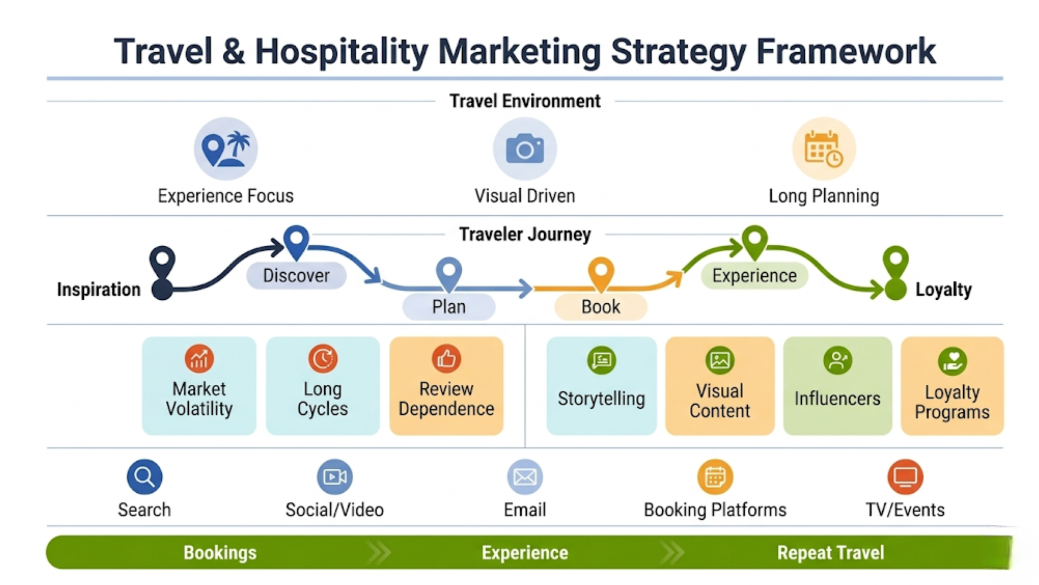
Travel marketing differs from most industries because the product being marketed is an experience rather than a physical object.
Destinations, hotels, airlines, and tourism organizations must inspire curiosity and desire long before consumers begin planning their trips.
Effective travel marketing relies heavily on storytelling and visual imagery. Marketing campaigns help potential travelers imagine themselves exploring a destination or relaxing at a resort.
Marketing Challenges in the Travel Industry
External Market Volatility
Travel demand can change quickly due to economic conditions, geopolitical events, or public health concerns.
Marketing strategies must adapt to these fluctuations.
Long Planning Cycles
Many travelers begin researching destinations months before making reservations.
Marketing campaigns must remain visible throughout this extended planning process.
Dependence on Reviews and Reputation
Travel decisions often depend heavily on peer recommendations and online reviews.
Maintaining a strong reputation across review platforms is therefore essential.
Core Travel Marketing Strategies
Destination Storytelling
Tourism organizations often build campaigns around cultural narratives and distinctive experiences.
Marketing content highlights elements such as:
- local traditions
- natural landscapes
- cuisine
- historic attractions
These narratives differentiate destinations from competitors.
Visual Inspiration
Photography and video represent the foundation of travel marketing.
High-quality imagery allows potential travelers to imagine themselves experiencing the destination.
Influencer Campaigns
Travel creators frequently partner with tourism boards and hospitality brands.
Influencers document travel experiences through social media, video platforms, and blogs.
Loyalty Programs
Airlines and hotel chains maintain sophisticated loyalty programs that reward frequent travelers.
These programs encourage repeat bookings and strengthen customer relationships.
Digital Marketing Channels in Travel
Search Marketing for Travel Planning
Travel planning often begins with search queries such as destination recommendations, flight deals, or hotel comparisons.
Travel brands optimize content around these searches.
Social Media Travel Inspiration
Many travelers discover destinations through social media content.
Short travel videos and photography influence destination awareness.
Email Travel Campaigns
Travel providers frequently send promotional emails featuring seasonal packages, discounts, and new destinations.
Online Booking Platforms
Booking platforms function as both distribution and marketing channels.
Hotels and airlines optimize listings with strong imagery and guest reviews.
Traditional Marketing Channels in Travel
Television Campaigns
Destination campaigns frequently appear on television to build national or international awareness.
These advertisements emphasize emotional storytelling.
Travel Publications
Travel magazines and guidebooks continue to influence destination perception among certain audiences.
Tourism Exhibitions
Travel fairs and exhibitions allow tourism organizations to interact directly with travelers and travel agencies.
Emerging Trends in Travel Marketing
Experience-Based Travel
Travelers increasingly seek immersive experiences such as culinary tours, cultural workshops, and adventure activities.
Marketing campaigns highlight these experiences rather than simply promoting destinations.
Sustainable Tourism
Environmental concerns influence travel decisions more strongly than in previous decades.
Destinations increasingly promote sustainable practices and responsible tourism initiatives.
Short-Form Travel Content
Short-form video platforms now play a major role in destination discovery.
These clips provide quick visual glimpses into travel experiences.
Strategic Comparison Across Industries
Marketing Complexity and Product Risk
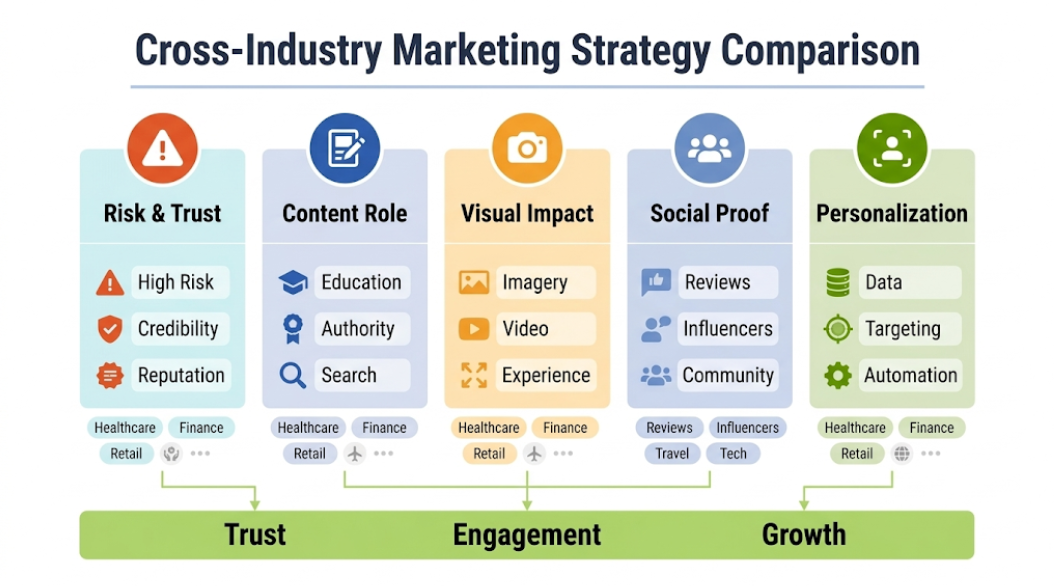
Industries involving high financial or personal risk require stronger trust-building strategies.
Healthcare, finance, and real estate marketing emphasize credibility, expertise, and reputation.
Consumer goods industries such as food rely more heavily on emotional branding and visual appeal.
Role of Content Marketing
Industries where buyers must understand complex information rely heavily on educational content.
Technology, healthcare, education, and finance all use content marketing to guide audiences through decision processes.
Educational resources establish authority while attracting search traffic.
Importance of Visual Storytelling
Industries that sell experiences rely heavily on visual communication.
Travel, hospitality, food, and real estate marketing depend on imagery and video to communicate value.
These visuals help audiences imagine themselves experiencing the product or service.
Influence of Community and Social Proof
Across nearly every industry, peer influence increasingly shapes consumer decisions.
Reviews, testimonials, influencer partnerships, and user-generated content now influence purchasing behavior across multiple sectors.
Data-Driven Personalization
Modern marketing strategies increasingly rely on customer data and predictive analytics.
Personalization technologies allow organizations to deliver tailored messages and product recommendations.
This trend appears across industries ranging from ecommerce to financial services.
FAQ
What is the biggest mistake companies make when building an industry marketing strategy?
The most common mistake is copying tactics from another industry without adjusting for buyer behavior, regulation, sales cycles, and trust requirements. A strategy that works in ecommerce may fail in healthcare, finance, or B2B technology because the decision-making process is completely different.
How do you know whether your marketing strategy fits your industry?
A strong industry-fit strategy usually matches how buyers actually research, evaluate, and purchase. If your channels, messaging, and offers feel disconnected from the way customers make decisions in your market, the strategy likely needs adjustment.
Should companies focus on one main channel or use multiple channels?
Most companies should build a multi-channel strategy, but not all channels deserve equal investment. The right approach is to prioritize the channels that match buyer intent and then support them with secondary channels that improve reach, trust, and conversion.
How often should an industry marketing strategy be updated?
Most companies should review strategy at least quarterly and revisit positioning more deeply once or twice a year. Fast-moving sectors like technology, retail, and travel may need more frequent updates because competition and customer expectations change quickly.
Can small businesses use industry-specific marketing strategies, or is this only for large companies?
Small businesses often benefit even more from industry-specific strategy because they cannot afford wasted budget. A focused strategy helps smaller teams invest in the channels and messages most likely to produce results.
What matters more: brand building or lead generation?
Neither should exist in isolation. Brand building improves trust and recognition over time, while lead generation creates immediate opportunities. The right balance depends on the industry, the sales cycle, and how competitive the market is.
How should companies measure whether their industry marketing strategy is working?
They should track both channel-level performance and business outcomes. Useful indicators include qualified leads, conversion rates, customer acquisition cost, sales velocity, retention, and the contribution of marketing to revenue growth.
When should a company bring in outside marketing leadership or a fractional CMO?
This usually makes sense when a company has growth goals but lacks strategic direction, internal marketing leadership, or alignment between execution and revenue objectives. It is especially valuable when teams are active but results are inconsistent.
How does AI change industry marketing strategy?
AI can improve personalization, research, segmentation, content workflows, and campaign optimization, but it does not replace strategic thinking. The companies that benefit most use AI to scale insight and execution while keeping industry knowledge at the center.
What makes a marketing message credible in high-trust industries?
Credibility usually comes from specificity and proof. Case studies, expert voices, certifications, transparent claims, and real outcomes tend to outperform vague promotional language in industries where buyers perceive higher risk.
Should companies organize marketing by channel or by customer journey?
The customer journey is usually the better organizing principle. Channels matter, but strategy becomes stronger when teams design messaging and campaigns around awareness, evaluation, conversion, and retention rather than treating each channel separately.
What is the best first step when creating an industry-specific marketing strategy from scratch?
Start by understanding how buyers in that industry make decisions. Once that is clear, positioning, messaging, channels, and campaign structure become much easier to design in a way that matches the market.
Final Thoughts
Marketing strategy cannot be separated from industry context. Each sector operates within its own regulatory frameworks, customer expectations, and purchasing behaviors.
Technology marketing emphasizes education and product expertise. Healthcare marketing builds trust and patient relationships. Retail marketing focuses on customer experience and personalization. Travel marketing inspires imagination through storytelling.
Understanding these structural differences allows marketing professionals to design strategies that align with the realities of their industries.
At the same time, several forces continue reshaping marketing across sectors. Digital transformation, data-driven personalization, and community influence now affect nearly every industry.
Organizations that combine deep industry understanding with these emerging capabilities will remain competitive as marketing continues to evolve through a more integrated growth marketing strategy.
How We Help Companies Execute Industry-Specific Marketing Strategies
If there is one theme that runs through everything discussed in this guide, it is this: marketing strategy only works when it is deeply aligned with the realities of your industry.
Over the years, we have seen companies struggle not because they lacked effort or budget, but because they applied generic marketing tactics to highly specific industry challenges. What works for a SaaS company rarely works for a healthcare provider. What drives growth in ecommerce often fails in financial services.
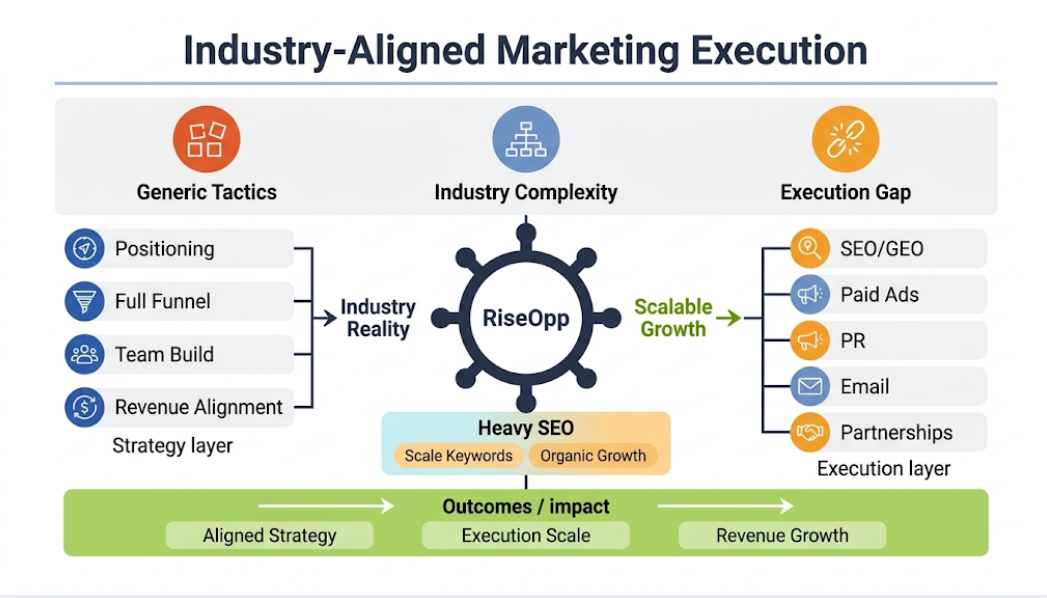
That gap between strategy and execution is exactly where we focus our work at RiseOpp.
We work as a Fractional CMO and SEO partner for both B2B and B2C companies, helping teams design and execute marketing strategies that are tailored to their industry, growth stage, and competitive landscape. Our approach combines strategic leadership with hands-on execution across all major marketing channels.
From a strategy perspective, we help companies:
- Define clear positioning and messaging
- Build full-funnel marketing strategies
- Structure and hire high-performing marketing teams
- Align marketing with revenue and growth objectives
From an execution standpoint, we support across:
- SEO and GEO
- PR and brand visibility
- Google Ads, Meta Ads, LinkedIn Ads, TikTok Ads
- Email marketing and lifecycle campaigns
- Affiliate and partnership marketing
One area where we have built a strong advantage is SEO. We use our proprietary Heavy SEO methodology, which focuses on systematically expanding a website’s keyword footprint over time. Instead of chasing a handful of keywords, we build strategies that position companies to rank for tens of thousands of relevant search terms, creating compounding organic growth.
As you have seen throughout this article, every industry requires a different marketing approach. Our role is to translate that complexity into a clear, executable strategy and then help teams deliver results consistently.
If you are looking to refine your marketing strategy or scale execution across channels, we would be happy to explore how we can support your team.
Comments are closed